Mermaid tail plant care is all about keeping this unique succulent happy in your home. With its sculptural, wavy crest (resembling a mermaid’s tail), this plant is a striking statement in any room.
Despite its exotic appearance, it’s fairly undemanding: it thrives on light, air, and a “right-place, right-time” approach to watering. Even in small apartments, you can enjoy its dramatic curves by providing a few key conditions.

Many beginners find mermaid tail succulents surprisingly forgiving once they understand the basics. Keep the plant warm (above about 60°F) and in bright light, water sparingly, and use a loose, fast-draining soil.

Treat it kindly and it will grow slowly but steadily. The result is a long-lasting, low-maintenance houseplant that adds a tropical, artistic flair to an urban home.
Quick-Reference Care Summary/checklist
- Light: Provide bright, indirect sunlight, a window sill or bright room is best. Avoid intense midday sun on the foliage. Rotate occasionally for even growth.
- Water: Water sparingly. Allow the soil to dry out completely between waterings. Overwatering leads to root rot, so empty the saucer and never let the pot sit in water. Cut back watering further in fall and winter.
- Soil & Pot: Use a very well-draining cactus/succulent mix, often with extra perlite or coarse sand. Choose a pot with drainage holes (terracotta is ideal for airflow).
- Temperature & Humidity: Keep indoor temps warm (ideally above ~60°F). This succulent likes normal room humidity; it does not need extra moisture. Good air circulation and a moderately dry environment are preferred.
- Fertilizer: Feed lightly only during the growing season (spring/summer). A weak cactus or balanced houseplant fertilizer once per month is enough. Do not fertilize in dormant winter.
- Grooming & Pruning: Remove any brown or dead bits promptly. If the crest gets very tall or leggy, you can trim the top – cutting just above a leaf node will cause new side shoots to sprout. Wipe dust off the waxy surface so it can “breathe” and absorb light.
- Common Issues: Overwatering is the most common problem; watch for soft, discolored base or mushy stems. Stretching (etiolation) or faded color means too little light.
Succulents can attract pests like mealybugs (white fuzzy bits) or scale; treat infestations early with rubbing alcohol or insecticidal soap. Always keep the plant free of rotting debris. - Pet Safety: Mermaid tail (a Euphorbia) contains a milky sap that can irritate skin and is toxic if ingested. Keep it away from pets and children. Handle with care and wash any sap off skin immediately.
Euphorbia lactea ‘Cristata’, commonly called the Mermaid Tail succulent, displays the wavy, fan-like crest that gives this plant its name. It thrives in bright, indirect indoor light.
Mermaid Tail Plant Care: Light Requirements

Mermaid tail plants need bright light to stay compact and colorful. In practical terms, this means a spot near a south-, west-, or east-facing window where it gets plenty of morning or late afternoon sun, but protected from scorching midday rays.
Your houseplant is dying right now — and you have no idea why.
Stop killing your houseplants.
The fix takes 60 seconds.
Snap a photo. LetPlant AI instantly diagnoses what’s wrong, tells you exactly when to water, and alerts you before it’s too late — not after.
FREE Save my houseplants nowNo credit card. No catch. Just healthier houseplants.
If the only light is low (as in a dim apartment corner), the plant will survive but grow very slowly and its green may pale. You might supplement natural light with a grow lamp if the foliage starts stretching out (growing long and floppy).
Rotate the pot every few weeks so all sides of the crest get light. Think of this plant as thriving on filtered light: too little will weaken it, but filtered direct sun (morning or late sun through a curtain) is ideal.
Mermaid Tail Plant Care: Watering and Moisture Control

As a succulent, the Mermaid Tail is built to handle dry periods, not constant moisture. Its thick crested stems store water. Water deeply but infrequently: wait until the potting mix is completely dry before giving it more water.
In most homes this works out to watering every 2–3 weeks during spring and summer, then much less (perhaps only once a month or less) in autumn and winter.
When you water, do so thoroughly, letting water run out of the bottom; then tip out any excess from the saucer. Never allow the plant to sit in water because its roots cannot stay wet without rotting.
Indoor air is usually fairly dry, which is fine for this plant – it does not need high humidity. However, extremely dry conditions (radiator heat or air conditioning blasting directly on it) can stress any houseplant, so try to keep it in a stable environment.
Generally, it’s better to underwater than overwater. If you notice leaves shriveling, that means it’s thirsty; but brown mushy spots mean overwatering.
Mermaid Tail Plant Care: Soil and Potting.

Use a well-draining succulent or cactus soil mix so that water passes through quickly. A common DIY mix is half regular potting soil and half perlite or coarse sand.
Good drainage is non-negotiable: every pot must have drainage holes to let excess water escape. Terracotta or unglazed ceramic pots are excellent choices because they “breathe” and help the soil dry out. Avoid plastic pots that hold moisture for too long.
In cramped living spaces, a medium container is ideal. Mermaid tails are slow growers, rarely needing more than an occasional repot every 2–3 years.

When repotting, gently free any matted roots and move to a pot only a couple of inches larger in diameter. Using a pot that’s too big will keep the soil soggy longer and invites rot. New soil mixed with sand or perlite replicates its native dry conditions.
Mermaid Tail Plant Care: Temperature and Humidity
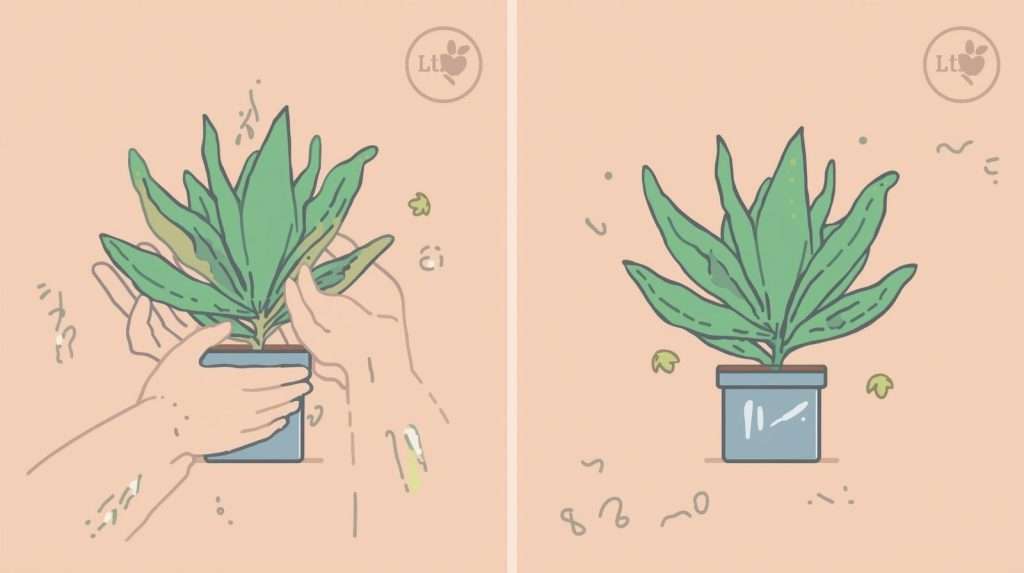
These succulents prefer warm indoor temperatures, roughly 18–27°C (65–80°F). Keep them away from cold drafts – they are not frost-hardy.
Even a brief exposure to temperatures below about 60°F (15°C) can cause damage. On the upside, normal room temperature year-round is just fine.
Mermaid tails do not require extra humidity. In fact, typical indoor air (even dry air) is acceptable. They evolved in tropical but arid climates, so misting isn’t needed. If your home is extremely dry, just ensure the room isn’t too hot and still.
Good air circulation around the plant helps prevent any potential issues. Overall, this plant prefers arid conditions: high humidity can sometimes encourage fungal problems at the soil line.
Mermaid Tail Plant Care: Fertilizing

This is a light feeder. During the growing season (spring and summer), apply a diluted balanced fertilizer or a cactus-specific fertilizer about once a month. Use about half the strength recommended on the label.
Over-fertilizing can harm this plant since its growth is naturally slow. You want to encourage healthy foliage, but not push it into a growth spurt that leaves might tear under its own weight. Do not fertilize in fall and winter when the plant is mostly resting.
In short, fertilize sparingly: most indoor-grown mermaid tails will be fine with fertilization only a few times a year.
Mermaid Tail Plant Care: Grooming and Pruning.

Regular grooming keeps your plant looking tidy. Remove any yellowed or dried-out portions by cutting them off with clean scissors. The mermaid tail’s crest can sometimes grow unevenly or become leggy (long and floppy).
If you want a bushier, more compact shape, feel free to trim the top back by a few inches. When you cut just above a node or wrinkle on the crest, it will often send out new offshoots from that spot.
Over time, you can create multiple fan-like branches this way. Beyond trimming, simply wiping the waxy surface with a soft cloth now and then (no cleaners needed) keeps dust from blocking light absorption.
Common Problems
- Root Rot:
 Because of its drought adaptation, the biggest risk is overwatering. A persistently wet root zone can cause the base of the crest to turn brown and mushy.
If this happens, cut off any rotten parts and repot immediately in fresh dry mix, then be stricter about drying out between waterings. - Etiolation:
If the plant does not get enough light, it may stretch or lose its compact form (blanc or elongated growth). The vibrant green can also fade. This is the plant’s cue for more light. Move it closer to a bright window or consider a supplemental plant light. - Pests:
 While mermaid tails are generally hardy, keep an eye out for common succulent pests. Mealybugs (small white fuzzy insects) and scale (tiny brown shell-like bumps) can occasionally appear.
Early detection is key. Treat any infestation by dabbing insects with isopropyl alcohol, or use an insecticidal soap spray, until the pests are gone. - Leaf/Ridge Damage:
 Bruising or burns on the crest usually come from sunburn or physical impact. If you see crispy edges, it likely got a dose of hot sun. If leaves shrivel, it may be too dry and needs a little water.
 - Fungal Issues:
 Rare in a dry home environment, but overwatering or high humidity can invite mold or mildew at the soil line. If noticed, improve air circulation and reduce watering.
Conclusion
A variety of potted succulents thriving indoors. Mermaid tail is one such easy-care plant that brings sculptural interest to a home. Growing a mermaid tail cactus indoors can be a rewarding experience even for busy urban gardeners.
By remembering the simple rules, lots of bright light, lean soil, and “less is more” with water – you’ll find this plant to be remarkably undemanding. In a warm, well-lit spot, your mermaid tail will slowly grow into a unique centerpiece with minimal fuss.
With occasional feeding, pruning, and the correct moisture routine, it will delight you with its wavy, ocean-like crest for years. In short, treat it like a typical succulent and avoid overcare, and your indoor mermaid tail will thrive, proving that impressive plants can indeed suit apartment living.