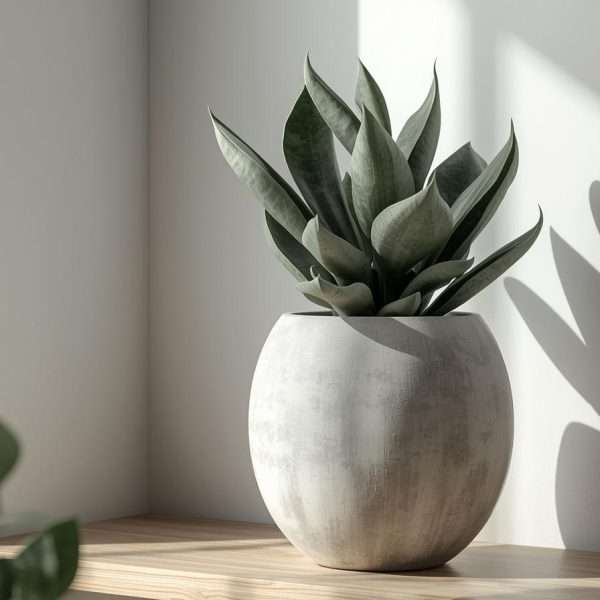
Painters palette plant care focuses on providing bright, humid, and warm conditions in well-draining soil to mimic its tropical origins.

(Anthurium andraeanum, commonly called flamingo or painters palette plant, thrives in bright indirect light, moist organic-rich soil, and high humidity.)
Below is a quick-reference care checklist followed by detailed sections covering all aspects of indoor Anthurium cultivation.

Quick-Reference Care Summary:
| Aspect | Details (Anthurium – Paintes Palette) |
| Botany: | Anthurium andraeanum (Araceae family). Also called flamingo flower or tailflower. Tropical epiphytic/perennial (USDA zones 10–11). Heart-shaped leaves; long-lasting colored bracts (flowers) year-round. |
| Light (lux): | Bright, indirect light. Aim for 1,000–2,500 foot-candles (≈11,000–27,000 lux). A spot near an east or shaded south window is ideal. Avoid direct sun to prevent leaf burn. |
| Temperature: | 70–85°F day; not below 60°F. Optimal 70–90°F. Rapid growth slows under 60°F. Keep away from drafts or hot/cold vents. |
| Humidity: | High (50–80%). Anthurium needs humidity above 50%. Use a tray of moist pebbles or humidifier; mist leaves daily if air is dry. |
| Watering: | Keep soil evenly moist but not waterlogged. Water when top 1″ dries; allow slight drying between waterings. Water thoroughly, then ensure excess drains away. Reduce frequency in winter. |
| Soil Mix: | Light, airy, organic-rich mix. Example: 2 parts peat/coco + 1 part orchid bark + 1 part perlite or charcoal. Good options include aroid mixes with bark or chunky orchid media. pH ~6.0–6.5. |
| Pot/Drainage: | Use a container with drainage holes. Unglazed clay is ideal to wick moisture. Pots should be no more than 1–2″ larger than root ball. Avoid dense soils; incorporate bark/perlite. |
| Fertilizer: | Monthly feeding in spring/summer. Use a balanced 20-20-20 or 3-1-2 ratio fertilizer at low dose (≈50 ppm N). Reduce feeding in fall. Wash leaves after fertilizing to avoid residue. |
| Pruning: | Remove yellow or dead leaves at base. Cut off spent bracts (spathes) after flowering. Clean cutting helps new blooms. Gently wipe foliage to remove dust. |
| Propagation: | Division: Best method – split large clumps during repotting.
Stem Cuttings: Rare for Anthurium, but small offshoots (pups) can root. Seed: Slow; not common for houseplants. |
| Repotting: | Repot every 2–3 years or when rootbound. Do in spring. Use slightly larger pot and fresh mix. Trim any rotted roots. Water lightly until acclimated. |
| Pests/Diseases: | Watch for aphids, mealybugs, scales, spider mites. Treat with insecticidal soap or neem. Overwatering causes root/crown rot (Phytophthora). Leaf blight and bacterial blight can occur in poor air. Wipe leaves dry. |
| Common Issues: | Leggy/No Flowers: Low light – increase brightness or use grow lights. Yellow Leaves: Overwatering or low humidity. Brown Tips: Fluoride in water or dry air. Flush soil if needed and raise humidity. |
| Toxicity: | Moderately toxic to pets (calcium oxalate crystals). Keep away from cats/dogs. Skin contact may irritate; wear gloves when handling. |
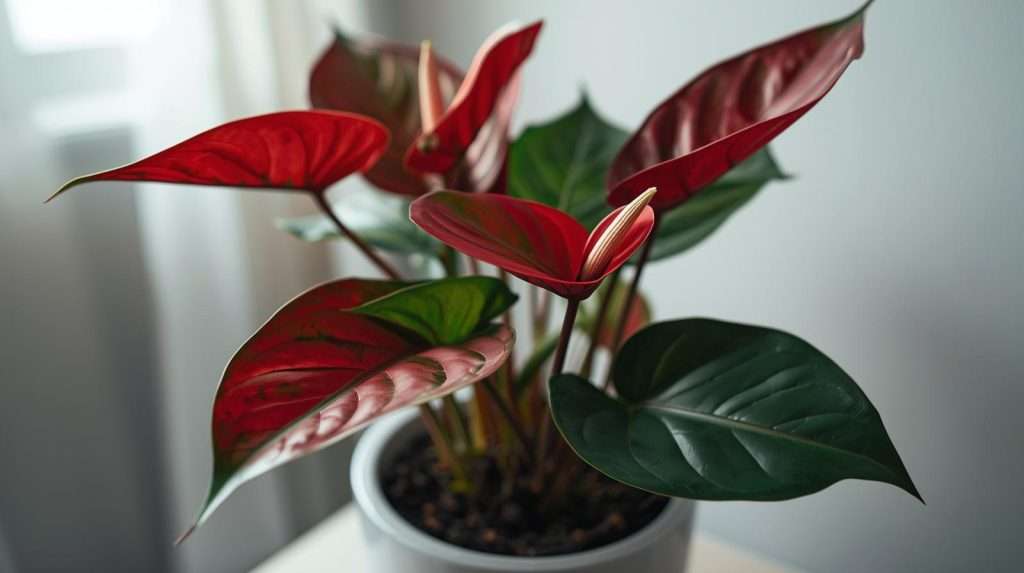
Image: Anthurium andraeanum (painter’s palette) with bright bracts and glossy leaves. Note the shallow pot with barky mix used in orchid-like plants.
Painters Palette Plant Care: Taxonomy & Common Names
Anthurium andraeanum is a tropical epiphytic perennial native to Colombia and Ecuador. It’s in the Araceae family, which includes philodendrons and pothos. Common names are flamingo flower, tailflower, and painters palette.
Many cultivars exist, all sharing the characteristic long-lasting colored spathes. Indoors, “cultivar unspecified” care applies broadly to most Anthurium hybrids. Because they come from humid understories, these plants prefer shade or filtered light, not full direct sun.
Painters Palette Plant Care: Light Requirements

Anthuriums need bright indirect light. They grow best with about 1,000–2,500 foot-candles (fc) of light – roughly what a south window with a sheer curtain provides. In lux, that’s ~11,000–27,000 lux.
East or shaded south windows work well. Avoid direct midday sun which can scorch leaves. If only low light is available, supplement with an LED grow light (full-spectrum, ~10–20W) kept 12–24″ above the plant for 10–12 hours.
According to UF guidelines, too much light (over ~2,500 fc) can cause pale leaves, while as little as 100 fc (~1,000 lux) may allow slow flowering.

Watch leaf color: yellowish-green leaves often mean excess light or nutrient imbalance. Rotate the pot monthly so all sides get even light and growth.
Painters Palette Plant Care: Temperature & Humidity

Keep Anthuriums warm and humid. Ideal temperatures are 70–85°F (21–29°C). They do poorly under 60°F; indeed, temperatures should not drop below about 55°F. At least 65°F nighttime is best for continuous growth. Indoor living room temperatures are usually fine, but avoid cold drafts from AC or heaters.
High humidity is crucial: aim for 60% or higher. Florida recommendations advise trays of water or misting to maintain humidity.
Place the pot on a pebble tray or use a humidifier, especially in winter. Dry air can cause leaf edges to brown and cause leaf drop.
If leaves lose their glossy sheen or edges darken, the humidity is likely too low. Good air circulation is also needed to prevent fungal issues, but avoid chilly drafts.
Painters Palette Plant Care: Watering

Water regularly but do not overwater. The goal is consistently moist soil: water when the top 1″ feels dry. Use room-temperature water and water thoroughly so it drains from the bottom.
Then let the soil surface dry slightly before watering again. In practice, water about once a week in warm months, less in winter. Overwatering leads to root rot, while underwatering causes wilted leaves.
If using tap water, let it sit out to reduce chlorine/fluoride (which can brown tips). A gray residue on leaves indicates mineral buildup. Consistently moist conditions are key: UF/IFAS notes to keep Anthurium on a tray of moist pebbles and even mist daily.
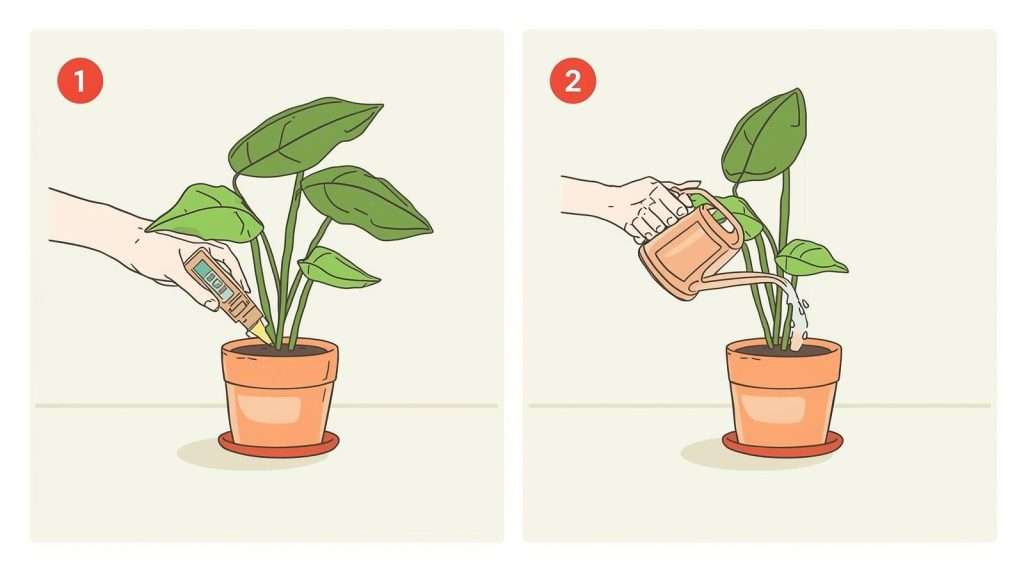
During dry indoor heat, check soil more often. A moisture meter probe can help avoid guesswork. Always dump any excess water in saucers to avoid standing water.
Painters Palette Plant Care: Soil & Potting Mix

Anthuriums require a light, well-aerated, and organic mix. Common recipes: 50% orchid bark + 25% peat/coir + 25% perlite or charcoal. Some growers use 1:1:1 peat:pumice:bark.
These plants are epiphytic; they dislike dense clay. The mix should hold some moisture but drain quickly. Use high-quality potting soil amended with orchid bark and perlite.
Ensure media pH is near neutral (6.0–6.5). Incorporate organic matter like compost or aged manure for nutrients. Good drainage is essential. If you see water pooling or slow draining, remove some peat and add more bark/perlite.

Repot every 1–2 years to refresh the soil and remove any compacted roots. Anthurium roots are fragile and prefer to be slightly constrained rather than in a huge pot.
Painters Palette Plant Care: Pot Type & Drainage

Use a container with drainage holes; this is non-negotiable. Anthuriums won’t tolerate waterlogging. Terra cotta or fibrous pots are fine. A snug pot (1–2″ larger than root ball) is best, as oversized pots encourage sogginess.
Place a layer of clay pebbles or bark on the surface to conserve moisture and prevent soil splash. Avoid self-watering planters unless you monitor moisture carefully.

Elevate the pot on pebbles in a tray for humidity without letting roots sit in water. Ensure any decorative cachepot has ventilation holes in the inner liner.
If roots start growing through holes, it’s time to repot. Generally, repot in spring in a new potting mix, as older media can acidify and compact.
Painters Palette Plant Care: Fertilization Schedule

Feed moderate amounts of balanced fertilizer. A water-soluble 20-20-20 or 20-20-30 formula at about 50 ppm nitrogen once a month during spring and summer works well. Some growers alternate N-P-K ratios (higher N earlier, then higher P for blooms).
For home care, any balanced houseplant fertilizer diluted to half-strength is fine. Over-fertilizing leads to leaf burn and salt buildup; flush the soil occasionally.
Organic fertilizers like fish emulsion can also be used. If using slow-release granules, 2.5–3.0 lb/1000 sq ft per month (commercial rate) corresponds to a few tablespoons per pot in home use.
Stop fertilizer in winter when growth slows. Always water the plant before feeding if soil is dry to avoid root damage.
Painters Palette Plant Care: Pruning & Maintenance

Prune off yellow or damaged leaves at the base. Remove old flower spathes once they fade to keep the plant tidy (use clean scissors to cut the stalk near the base).
Wipe leaves occasionally to keep them dust-free; clean leaves photosynthesize better. Keep an eye out for suckers at the base (offshoots) – leave some to fill out the plant, or remove excess to redirect energy.
Trim leggy stems back if needed to encourage bushiness. You can pinch very young plants to promote branching. Also, pinch off any mutated or misshapen new growth. Regular grooming helps airflow and prevents pests.
Propagation (Step-by-Step)
- Division:
 The easiest method for potted Anthuriums. In spring, remove the plant from its pot and gently separate a clump of roots with 1–2 growth points.
Use a sterilized knife if needed. Plant divisions into their own pots with fresh mix. Keep them slightly shaded and moist until reestablished. - Stem Cuttings:
 Less common. Take a side shoot with aerial roots and place it in moist sphagnum or mix; keep high humidity. It may root into a new plant. Not widely practiced.
 - Seed:
 Anthuriums do set seed (red berries) but germination is slow. Surface-sow fresh seed in a peat-based mix. Provide high humidity and warm temps (75–85°F). Seedlings take many months to flower. (If a specific cultivar’s hybrid, seeds may not breed true.)
Propagation best done in late spring/early summer. Use sterilized tools and clean pots to reduce disease risk. Labelling new plants is recommended since Anthurium growth is slow.
Repotting Timing & Technique
Repot Anthurium every 2–3 years or when visibly rootbound. Spring is best, as plants are resuming growth.
To repot: water plant a day before to reduce stress. Turn out the root ball, tease roots gently, and remove any dead material. Place in a new pot (1–2″ larger) with fresh airy mix. Pack soil evenly and water lightly. Avoid burying crowns; keep the soil level similar.
After repotting, maintain normal care but do not fertilize for the first month. Plants may wilt slightly at first, so keep in moderate light and humidity. Repotting later in season can delay blooming; if done in fall, provide strong supplemental light.
Painters Palette Plant Care: Pests & Diseases
Common pests: Spider mites, mealybugs, scale, aphids. These thrive in dry indoor air. Check undersides of leaves periodically. Wash off pests with a mild soap or neem spray; repeat as needed. Interceptor sticker traps can catch flying pests.
Disease: Anthurium can get bacterial blight (leaf spots) and root rot. Water carefully to avoid wet leaves and ensure fast drainage. If root rot occurs (brown mushy roots, wilting), trim affected roots, let the rest dry slightly, and repot in fresh mix.
Good sanitation (clean pots, no soggy soil) prevents most diseases. Powdery mildew can occur on dusty leaves; maintain humidity but ensure air flow. Fungicidal sprays are rarely needed for healthy indoor plants.
Monitor for tip burn – may indicate fluoride (use filtered water) or overfertilization. Good air movement and moderate humidity go a long way in disease prevention.
Apartment-Specific Tips
- Space-saving:
 Choose compact cultivars or keep plants pruned for a bushy, tabletop form. Hang baskets of smaller Anthurium species or put pots on shelves to save floor space.
 - Low-light Strategy:
 If windows are dim, use an LED grow lamp (10–30W) 12–14 hours per day. Full-spectrum (white) LEDs work best. Place lamp ~12″ above the plant and raise as it grows. Rotate plants under the lamp weekly.
 - Humidity Tricks:
 Beyond trays, group plants together or use a humidifier. Bathroom placement (if light is adequate) can provide extra humidity.
 - Decor Integration:
 Anthurium’s shiny leaves brighten corners. They tolerate relatively low light compared to some flowers, so they’re among the easier flowering plants for apartments. Pair them with foliage plants (philodendrons, ferns) for a tropical display.
Seasonal Care Calendar
| Month | Light & Temp | Watering & Maintenance |
| January | Bright spot (south/east window). Keep ~68–72°F. Short days: consider a 10–12h grow light. | Water lightly (reduce frequency). No fertilizing. Wipe dust off leaves regularly. |
| February | Increasing daylight. Maintain bright indirect light. Temperatures ~70°F. | Resume moderate watering (every 7–10 days). Begin feeding every 4–6 weeks if new growth appears. Check for pests. |
| March | Longer days: full indirect sun or lamp. 65–75°F. | Water thoroughly; keep soil evenly moist (every 5–7 days). Fertilize with balanced feed. Inspect and prune any weak growth. |
| April | Strong light available. Avoid scorching midday sun. Warm ~72–78°F. | Water 1–2 times/week (depending on heat). Continue monthly fertilizing. Remove old bracts to encourage new blooms. |
| May | Peak light: brilliant indirect sun. | Increase humidity (misting or trays). Water ~2x/week. Plants may flower vigorously – deadhead spent spathes. |
| June | Bright light continues. Aim 75–80°F. | Maintain moist soil (water ~2x/week). No change in fertilizing. Watch for signs of overwatering (yellow leaves). |
| July | Strong summer light. May use light shade midday. | Water 2–3x/week. If heating causes dryness, increase humidity. Keep fertilizing monthly. |
| August | Bright but gradually less intense. | Water 2x/week. Stop fertilizing mid-August to prepare for slower growth. Remove any leggy shoots. |
| September | Light dims; prepare for less sun. | Water 1x/week or when soil dry 1″. Fertilizer pause. Begin to monitor for lower humidity with fall heating. |
| October | Use grow lights as needed (10–12h/day). 65–72°F. | Water ~7–10 day interval. No feeding. Trim older leaves. Plant may slow bloom; treat as semi-dormant. |
| November | Short days; keep plant in brightest spot. 60–65°F nights. | Water sparingly (~every 2 weeks). Keep humidity up. Plants may drop any remaining blooms. |
| December | Dim light, but maintain warm conditions. | Water minimal (~every 2–3 weeks) to keep soil just moist. Leave in bright spot.
Provide occasional misting or pebble tray humidity. |
Troubleshooting Common Problems
- Poor Growth or No Flowers:
 Often too little light or low nutrients. Move closer to light or add supplemental lighting. Increase fertilization slightly in spring.
 - Yellowing Leaves:
 Usually overwatering or low humidity. Check soil moisture and drain excess. Increase humidity with misting/tray.
 - Brown Leaf Edges/Tips:
 Could be fluoride in water or dryness. Use filtered water and keep humidity high. Slight salt build-up from fertilizer can also burn tips – flush soil yearly.
 - Dark or Soft Rot on Stems:
 Sign of root or crown rot (Phytophthora). Remove plant, trim away mushy roots, repot in fresh mix, cut back watering. Prevent by good drainage.
 - Wilting Despite Moist Soil:
 Possibly root bound or pest attack. Check pot size and roots; divide if needed. Inspect for borers or scales at leaf bases.
 - Pale or Mottled Leaves: May indicate nutrient deficiency or pest (mealybug) infestation. Feed appropriately and check undersides of leaves for bugs.
Safety & Pet Considerations
Anthurium contains calcium oxalate crystals and is toxic if ingested by pets or humans. Keep plants out of reach of cats, dogs, and children. Skin contact may cause irritation; wear gloves if sensitive. Assume toxicity and handle accordingly (wash hands after touching sap).
Assumptions: Guidance applies to standard Anthurium andraeanum cultivars (flowering anthuriums) indoors.
Variegated or non-flowering Anthuriums have similar needs. This advice assumes no special dwarf or hybrid types. All recommendations are for indoor apartment settings (no outdoor care). Care information is based on university extension sources and horticultural research.