Burle Marx Plant Care is all about looking after tropical bromeliads – especially popular indoor varieties like Guzmania and Vriesea – so they stay lush and colorful even in a city apartment. These exotic “tank” plants store water in a central cup formed by their leaves.
In their native forest habitats they grow in filtered light under trees, so indoors they do best in bright but indirect sunshine (think near an east or west window).

While they thrive in warm, humid air, most bromeliads adapt well to normal home conditions (average 60–80°F and 40–60% humidity).

They’re generally easy-going plants, forgiving if you forget to water occasionally, but they will grow strongest with the right light, humidity, and a loose, well-draining potting mix.
In short: give them bright indirect light, moderate humidity, and a light hand with water and fertilizer, and your bromeliad will reward you with bold foliage and (if it flowers) a long-lasting bract or bloom.
Burle marx plant care also means remembering their special watering and feeding habits. Unlike ordinary potted plants, bromeliads get much of their water through leaves and their central “cup.”
Fill that cup only about ¼ to ½ full, flush and refresh it every month or so, and let the potting mix barely stay moist – never waterlog it. They prefer a chunky mix (orchid bark, perlite, or coir mixed with regular potting soil) that drains quickly.
Feed lightly during spring and summer with a diluted houseplant or orchid fertilizer (once a month or even less), and skip feeding in winter.

Your houseplant is dying right now — and you have no idea why.
Stop killing your houseplants.
The fix takes 60 seconds.
Snap a photo. LetPlant AI instantly diagnoses what’s wrong, tells you exactly when to water, and alerts you before it’s too late — not after.
FREE Save my houseplants nowNo credit card. No catch. Just healthier houseplants.
In an apartment setting, placing the plant in a bright spot (or under a grow light if needed) and occasionally misting or grouping plants can help simulate the higher humidity they enjoy.
Overall, Bromeliads are non-toxic to pets and make stunning statement plants that are surprisingly low-maintenance once you’ve got the basics down.
Quick-Reference Care Summary
- Light: Bright, indirect light (east or west window). Avoid strong direct sun. Vriesea and other hard-leaved bromeliads tolerate medium light; Guzmanias prefer very bright, filtered light.
- Water: Keep the central cup about ¼–½ full; flush it with fresh water every 1–2 months. Water the soil sparingly – only when it is mostly dry – to avoid root rot. Use distilled or rainwater if your tap is hard.
- Soil: Use a very well-draining mix (orchid bark or cactus mix with perlite). Bromeliads are epiphytes, so they need lots of air around their roots. A mix of orchid bark and coco coir or peat works great.
- Temperature: Keep warm (ideally 65–80°F). They will tolerate down to the mid-60s°F at night, but avoid cold drafts or frost.
- Humidity: Moderate to high. Average home humidity is okay, but mist weekly or use a pebble tray if your air is dry. Grouping plants also raises humidity.
- Fertilizer: Light feeding only in spring/summer. A weak liquid fertilizer or orchid food at half strength once a month is enough. Avoid over-fertilizing (salt buildup can burn leaves).
- Repotting: Rarely needed. Bromeliads have small root systems. Only repot in spring if the plant outgrows its pot or when pups (baby plants) are growing too big.
- Propagation: After flowering, the plant sends out pups at its base. Let pups grow ⅓–½ the size of the mother, then cut them off and pot them up in fresh mix. The mother plant will slowly die after blooming (it may last 3–6 years total).
- Common Pests: Watch for mealybugs, scale, and spider mites. Wipe them off with a cotton swab dipped in alcohol or spray with mild soapy water. Avoid heavy oil sprays (they can smother bromeliads).
- Common Problems: Overwatering leads to root or crown rot (brown mushy center). Browning tips can indicate salt build-up from fertilizer or hard water. Yellow or stretched leaves mean too little light. Brown leaf patches mean too much direct sun.
Burle Marx Plant Care: Light and Placement

Bromeliads need bright, indirect light to flourish, just like the understory of a rainforest. In most apartments, the best spot is near an east- or west-facing window with filtered sun; a bright north window can work too if it’s very sunny outside.
Guzmania bromeliads actually tolerate quite low light – some types will even survive in artificial office light – but they will only stay compact and flower reliably if given bright indirect light.
Vriesea (Flaming Sword) plants can cope with medium-light rooms (they handle “a little lower light” than other bromeliads). Avoid intense direct sun (especially hot south or west afternoon light), as it will scorch the leaves.

If your apartment really lacks daylight, consider a small LED grow light in winter. Just remember: without enough light, these plants become leggy, lose their color, and won’t bloom or produce pups.
Burle Marx Plant Care: Watering and Humidity

Watering bromeliads takes a slightly different approach than typical houseplants. Their central leaf-cup (tank) is designed to catch water.
To water your plant, pour clean water into this cup – about ¼ to ½ full – and let the roots absorb moisture from the air and soil gradually. Flush out and replace the water in the cup every few weeks (or at least monthly) to prevent bacteria and salt buildup.
The potting mix itself should be kept barely moist. In the growing season (spring and summer), a thorough watering of the soil once every 1–4 weeks is usually enough – let the top inch or two of mix dry before watering again. In fall and winter, cut back to water even less often.
Use room-temperature water. If your tap water is high in salts or chlorine, let it sit out overnight before using, or use filtered/rainwater. Bromeliads are sensitive to mineral build-up: hard water can cause brown leaf tips and poor growth.

In dry indoor air, mist the leaves or keep a pebble tray with water under the pot to boost humidity. Regular misting (a light spray 1–2 times a week) helps emulate the humid jungle conditions and keeps the leaf edges from drying out.
Burle Marx Plant Care: Soil Mix and Potting

Choose a pot with drainage holes and a very loose, well-aerated soil mix. A standard recommendation is one part houseplant potting soil, one part orchid bark or perlite, and one part coco coir or peat.
Some growers even pot bromeliads exclusively in orchid bark or orchid-specific mix. The key is excellent drainage and good airflow around the roots. Never let bromeliad roots sit in soggy, waterlogged soil, as this quickly causes rot.
Bromeliad roots are fairly compact, so these plants seldom need repotting. Only repot if you see roots growing out the drainage holes or if the central cup has sunk well below the pot rim. If you do repot, spring or summer is best.
Use a slightly larger pot, just enough room for new pups or roots. Remove dead leaves or old, crumbling bark from around the plant when repotting. Apart from pups, you won’t normally need to disturb a healthy bromeliad in its pot.
Burle Marx Plant Care: Temperature and Humidity
These plants are tropical in origin, so they like warmth and humidity. Aim to keep indoor temperatures above about 60°F (16°C) at night, and ideally between 70–80°F (21–27°C) during the day.
They will tolerate short dips into the 60s and even the low 50s, but prolonged cold or drafts (like near a cold window in winter or next to an air conditioner vent) will stress them. Avoid spots near heat vents or fireplaces, which can dry the air too much.
Bromeliads love humidity. Normal home humidity (40–50%) is often fine, but they appreciate being in naturally more humid rooms (bathrooms or kitchens) if there’s bright light.

In a dry apartment, use tricks to raise humidity: cluster multiple plants together, use a humidity tray (water over pebbles under the pot), or run a humidifier nearby.
Misting the leaves is also a quick fix. Adequate humidity helps prevent brown edges and keeps the foliage looking healthy.
Burle Marx Plant Care: Fertilizing and Feeding

Bromeliads are light feeders. During the active growing season (spring and summer), a weak liquid fertilizer once or twice a month is enough.
You can use a balanced 20-20-20 fertilizer or an orchid fertilizer. Always dilute it to about ¼–½ of the recommended strength.
It’s often easiest to use a spray bottle to lightly mist the diluted fertilizer onto the leaves and into the cup (never pouring full-strength fertilizer into the cup, as the salts will burn the plant).
Over-fertilizing is a common mistake – it leads to brown leaf tips or a white crust on the leaves and soil. In fall and winter, stop feeding altogether, as the plant’s growth naturally slows and it doesn’t need extra nutrients.
If you notice tip burn or salt deposits, flush the cup with fresh water and occasionally rinse the soil as well.
Using rainwater or low-sodium water helps prevent these problems. Remember: bromeliads often get nutrients from debris in their cup (leaves falling into it in nature), so they really don’t need heavy fertilization indoors.
Burle Marx Plant Care: Blooming and Propagation
Bromeliads have a distinctive lifecycle. Each plant typically flowers once (producing the colorful bloom or bract) and then slowly declines, sending out baby plants (pups) before it dies.
A flowering bromeliad can put on a show for several months, and even after the bloom fades you’ll still have an attractive rosette of leaves. After flowering, just cut off the spent flower stalk. The mother plant will then devote energy to new pups at its base.

Once pups are about ⅓ to ½ the size of the parent, you can separate them for new plants. Use a sharp, clean knife to cut the pup (with a bit of its roots, if any) away from the old plant.
Pot each pup on its own in a small bromeliad mix. The parent may live for a couple of months as you do this, but eventually it will die and can be composted.
If you prefer not to separate pups, you can leave them attached; they will just form a clump around the original. In any case, propagating by pups is easy and ensures you’ll always have a next generation.
Blooming is tied to light and maturity – if a bromeliad never blooms, it may simply be too young or getting insufficient light.
You generally cannot force rebloom on the same plant, but the pups will bloom in due time as they grow. (For the very curious: placing an apple slice in the cup for a few days can produce ethylene gas that encourages one bloom, but it’s rarely needed by casual growers.)
Common Problems and Troubleshooting in Burle Marx Plant Care.
- Brown, rotting center (crown rot):
 This happens if the cup stays soggy or the plant gets water in the heart for too long. Ensure you are not overfilling the cup and that it can drain or be emptied regularly.
Remove any foul-smelling, mushy parts immediately; often the safest fix is to discard the dying mother plant and start fresh with pups. - Root rot (mushy lower leaves):
 Caused by waterlogged soil. Allow the mix to dry out more between waterings, and consider repotting into fresh, drier mix. Using a slightly smaller pot to avoid excess soil volume can help.
 - Brown leaf tips or crispy edges:
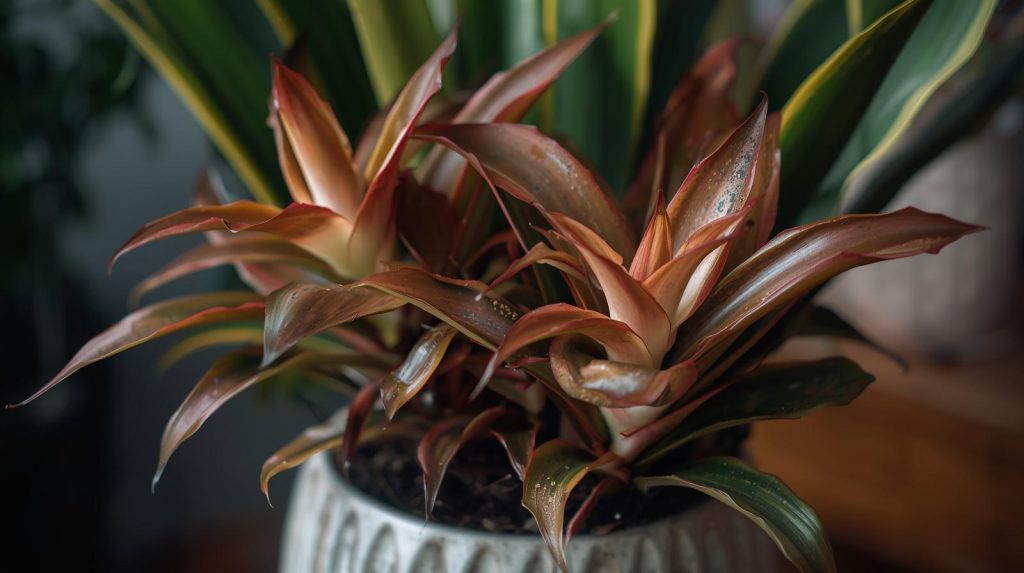 Could be from salt/fertilizer burn or very dry air. Flush the cup with fresh water and wipe salt deposits off leaves. Improve humidity by misting. Cut off burned tips with sterilized scissors for cosmetic reasons.
 - Yellow or faded leaves:
 Usually lack of light. Move the plant to a brighter spot. Also check that you’re not overwatering and that the cup water is changed periodically.
 - Scorched leaves (brown spots or bleached patches):
 Too much direct sun. Relocate to a less intense light spot.
 - Pests (mealybugs, scale, mites): If you see cottony bits, sticky residue, or tiny webs, wipe down leaves with rubbing alcohol on a cotton swab or spray with insecticidal soap.
Treat new pests early to prevent outbreaks. Do not rely on heavy oil sprays, which can clog the leaf scales and cause damage.
In general, bromeliads are forgiving and recover well once conditions are adjusted. Just remember: bright indirect light and an airy setup go a long way toward preventing most issues.
Conclusion
Bromeliads like Guzmania and Vriesea (often nicknamed Burle Marx’s bromeliads) bring a lush tropical vibe to indoor spaces with surprisingly little fuss.
As long as you keep them in a warm, bright spot out of direct flame (or AC blasts), water them correctly by using their central “cup,” and avoid chronic overwatering, they will reward you with dramatic foliage and occasional spectacular blooms.
They are adaptable enough for beginner and experienced plant lovers alike. With the simple routine outlined above, even apartment growers in low-light conditions can enjoy these unique, conversation-starting houseplants.
Follow the checklist, watch your plant’s signals, and soon you’ll have a thriving bromeliad that makes your home feel like a slice of the Brazilian rainforest. Happy gardening!