Best Plant Watering Reminder Apps: Many hobbyist gardeners set a rigid watering schedule, but plants do not follow a calendar. Soil moisture and the plant’s actual environment should drive when it gets watered, not the day of the week.
The EPA’s WaterSense program notes that soil moisture sensors can override a scheduled watering when there is already enough moisture in the ground, which cuts down on waste.

Overwatering, meanwhile, is one of the most common ways houseplants actually die. Blindly following a Monday-morning reminder often means wasting water or risking root rot instead.

Smart reminders, especially ones paired with real soil-moisture feedback, do a better job of keeping plants healthy.
This roundup compares seven of the top plant watering reminder apps available in 2026, LetPlant included. Each one is reviewed on its actual features, platforms, and pricing, plus any smart extras like sensors or plant identification versus the limits of a fixed schedule.
A comparison table follows the reviews, along with a look at why reminders alone can fall short and when real-time soil feedback actually matters.
How we chose these Best Plant Watering Reminder Apps

Your houseplant is dying right now — and you have no idea why.
Stop killing your houseplants.
The fix takes 60 seconds.
Snap a photo. LetPlant AI instantly diagnoses what’s wrong, tells you exactly when to water, and alerts you before it’s too late — not after.
FREE Save my houseplants nowNo credit card. No catch. Just healthier houseplants.
Every app on this list lets you set plant-specific reminders you can adjust for species or pot size, and sends real push notifications rather than alerts you only see if you happen to open the app.
Each has a free tier that covers at least a few plants, with premium reserved for power users rather than gatekeeping basic use.
We looked for apps that are honest about their own limits, calendar-based ones included, and noted where they add real extras like plant identification or sensor integration.
Usability mattered too: a clean interface, clear onboarding, and an easy way to add plants, whether by hand or by photo ID. Finally, every app here has shipped updates recently enough to count as actively maintained in 2026.
1. Planta, best for climate-smart scheduling
Planta is a polished app built in Sweden that puts together a tailored care plan for each plant. You add your plants by hand or snap a photo to identify them, and Planta’s algorithm weighs more than 30 factors, including species, pot size, local climate, season, and recent weather, to decide exactly when to water.
It pushes reminders like “your fern needs watering today” and adjusts them earlier or later if conditions change. The interface is intuitive and a little gamified: you can track growth over time and use a built-in light meter.
The catch is that most of this power sits behind a paywall. Planta is freemium, with a basic free mode, but unlimited plants and the full smart schedule cost $35.99 a year. If you do not mind the subscription, Planta’s data-driven reminders are hard to match.
2. Greg, best for personalization
Greg calls itself the zero-guesswork plant care app. It runs on iOS and Android and combines plant identification, community features, and care reminders.
Give Greg your plant’s identity, or let it identify one from a photo, tell it your environment, and it builds a personalized watering plan. Its own Play Store listing describes it plainly: it will “identify your specific plant type, tell you exactly how much to water it, and remind you when it’s time.”
That focus on the plant’s actual needs, instead of a rigid schedule, is the main selling point. Greg is free to download, with optional in-app purchases for extras like the social feed and advanced tips.
On the downside, Greg is newer and smaller than some rivals, so its plant database and diagnostics are less deep, and you still have to manually mark a plant as watered. It is a strong pick for a custom care plan and a community feel, but expect to hit paid features once you add several plants.

3. Blossom, best for all-in-one care on Android
Blossom, available on Android with an iOS version in some regions, works as a broad plant care companion. It packs plant identification, disease diagnosis, and the usual watering and fertilizing reminders into a single app.
Its standout is a database of more than 30,000 plant entries and the ability to diagnose issues from a photo. The reminder system itself is simple: set a schedule and get notified when it is time to water, fertilize, or repot.
The interface is clean and easy to pick up. Blossom currently lacks a global iOS release, and many of its better features sit behind an optional premium subscription.
It suits people who want more than just a watering alert, since identification, pest help, and care articles all live in the same app. The trade-off is you need Android, or an iPhone if you are in the U.S., and features like disease checks only come with the paid plan.
4. LetPlant, best for real-time moisture alerts

LetPlant is a free AI-driven care app for iOS and Android that stands out by pairing reminders with actual sensor data. Like the others here, it lets you identify plants and track care schedules.
Its real edge is the SDESA sensor: a soil probe that monitors moisture, ambient light, and temperature around the clock and syncs to the app.
Rather than waiting for a scheduled reminder, SDESA speaks up on its own, for example warning you if the soil is drying out faster than expected, before a leaf actually wilts. The app itself also handles smart reminders, a light meter, and a pet toxicity checker.
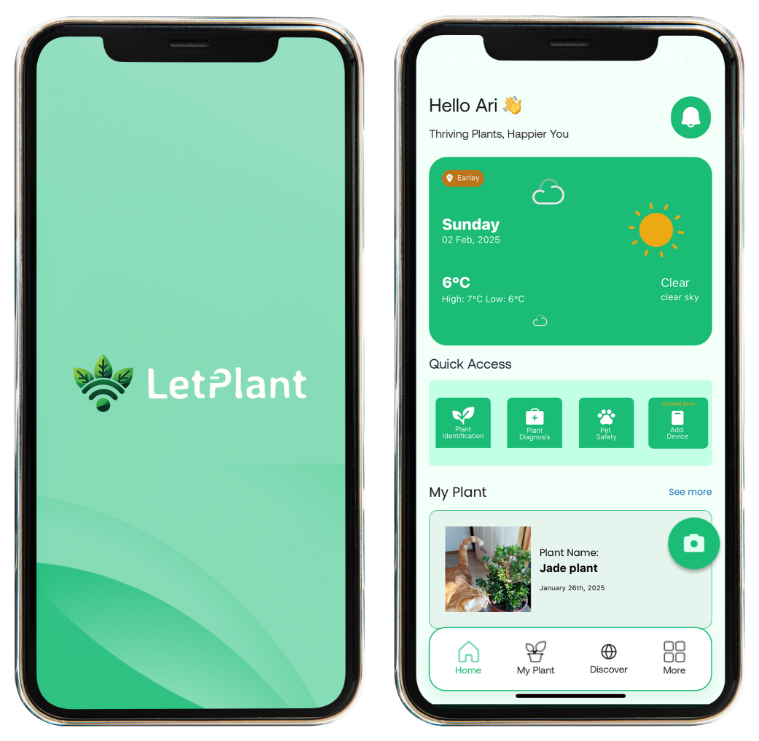
Because the core app is free, you get all of that without paying, and you buy the SDESA sensor separately if you want the real-time monitoring.
The honest limitation is that the sensor is a paid add-on, LetPlant’s user community is still smaller than some of the legacy apps here, and its scheduling logic is not quite as elaborate as Planta’s 30-factor model.
But for anyone who wants actual soil data instead of a guess, LetPlant is hard to beat. It answers a different question than most of this list: not what does the calendar say, but what does the plant’s soil actually say.
Our golden snake plant care guide notes that snake plants should only be watered once the soil is fully dry to avoid root rot, exactly the kind of timing an SDESA sensor is built to catch.
5. Happy Plant, best for gamified reminders
Happy Plant, on iOS and Android, turns watering into a game. You give each plant a name and an avatar, set a recurring schedule, and get rewarded with watering streaks, plant selfies, and time-lapse growth videos as you keep up with care.
The reminder system itself stays simple: pick a schedule and let the cheerful interface nudge you. The app is free, with an optional one-time payment to unlock extras. Its real strength is how little thought it requires: tap “I watered” when you do, and that’s it.
The limitation is just as clear. There is no sensor, no AI, no plant identification, and no soil check, only a solid reminder wrapped in a fun interface.
Happy Plant is good for keeping new plant parents consistent, but it stays purely schedule-driven and leans closer to a game than a full care tool.

6. Vera, by Bloomscape, best for plant journaling
Vera, made by plant retailer Bloomscape, is a free care management app available in the U.S. on iOS and Android, built around personalization and a plant journal.
You create a profile for each plant with a name, photos, and an adoption date, then log activities over time. Like the others here, Vera lets you set watering and fertilizing schedules and sends reminders when it is time.
Its standout feature is the activity log: you can add photos and notes for each watering, repotting, or even a singing session, and that history helps you spot patterns. Vera also includes Bloomscape’s own care tips library.
The trade-off is that it is U.S.-only and has no moisture-sensor integration, so it stays strictly calendar-based with no real-time data.
It suits anyone already in the Bloomscape ecosystem, or who just wants a well-designed free app for tracking and reminders. It is simpler than Planta or LetPlant on advanced scheduling, but reliable for the basics.
7. Gardenize, best for gardeners who want journaling
Gardenize is a full garden manager for iOS, Android, and the web that handles watering reminders as part of a much bigger suite, covering indoor and outdoor plants alike.
You build an entire garden by adding individual plants and even plot areas, and get reminders for watering, fertilizing, and pruning tailored to each one. The app also has note-taking, photos, and saveable tips.
Its real standout is the holistic approach: you can plan by season, track harvests, and manage dozens of plants across multiple gardens.
Free accounts cover adding plants and basic reminders, but the extended plant database, inspiration articles, and web sync all need a paid Plus subscription, around $3.75 a month billed annually.
For a hobby gardener juggling many plants or plots, Gardenize earns its keep. The trade-off is that it is more complex and web-oriented than a dedicated watering app, and it has no sensor integration.

| App | Best for | Platforms | Price | Standout feature |
| Planta | Climate-smart watering | iOS, Android | Free basic, $35.99/yr premium | AI-driven schedules across 30+ factors |
| Greg | Personalized care plans | iOS, Android | Free, in-app purchases | Custom watering plan by species and pot size |
| Blossom | All-in-one care (Android) | Android (iOS in some regions) | Free, optional subscription | Plant ID plus disease diagnostics and reminders |
| LetPlant | Sensor-based moisture alerts | iOS, Android | Free app, SDESA sensor sold separately | Real-time soil moisture alerts |
| Happy Plant | Gamified reminders | iOS, Android | Free, optional one-time upgrade | Game-like watering streaks and time-lapse photos |
| Vera | Journaling and simple reminders | iOS, Android (U.S. only) | Free | Activity log and care journal |
| Gardenize | Garden planning and reminders | iOS, Android, web | Free basic, ~$3.75/mo (Plus, billed annually) | Garden-wide planner with tailored reminders |
Fixed schedule vs. real soil data

A strict calendar ignores what is actually happening in the pot. A humidity spike or a cooler week indoors might mean no water is needed yet, even if the app pings you anyway.
In a heatwave, the opposite happens and the soil can dry out well before the next scheduled reminder.
This is the same logic behind EPA WaterSense soil moisture controllers, which override a scheduled watering once there is already enough moisture in the ground, so water only goes down when it is actually needed.
Schedule-only reminders skip that check and can easily tip into overwatering, one of the most common ways houseplants die.
Apps that factor in soil feedback, or that at least prompt you to check moisture by hand, do a better job here. Watering by actual need instead of by date keeps plants healthier and wastes less water.
When a reminder alone isn’t enough
A fixed reminder cannot account for sudden changes in your home. If the air turns very dry or very damp, a scheduled alert will not adapt to prevent under- or overwatering either way.
Most plant problems trace back to too much water rather than too little, and the Missouri Botanical Garden lists overwatering among the most common causes of houseplant death, something a reminder app will not catch unless you check the soil yourself first.
These apps also still depend on you: miss a notification or forget to log a watering, and the schedule quickly drifts out of sync with reality.
Watering reminders generally do not diagnose pests or root problems either, so a separate diagnosis tool, LetPlant’s AI included, covers that gap.
And a fixed schedule assumes typical growth, when slow and fast growers actually need different frequencies. Only plant-specific intelligence or an actual sensor can adjust for that.
Disclosure: this guide is published by LetPlant. We have aimed to give each app a fair, factual review based on its publicly available features.
FAQ

Should I just set a fixed schedule for watering?
A single blanket schedule tends to work against you, since plants vary by species, light, season, and even the humidity in your specific home, and a fixed routine can easily lead to over- or underwatering.
EPA WaterSense guidance on irrigation makes the same point about outdoor systems: sensors that track actual soil moisture only water when it is needed. Indoors, that means it is better to water when your plant actually needs it, checked by hand or by sensor, than by a routine alone.
What do plant reminder apps actually do?
Most let you enter each plant’s type and set a frequency for watering, fertilizing, and similar tasks, then send a notification on those days.
More advanced apps, like Planta or LetPlant, adjust that schedule using AI or climate data. Simpler apps just run on a timer you set yourself.
Are these apps free, or do they cost money?
Every app here has a free tier. Planta and Greg are free to download but charge a subscription for unlimited plants or extras. LetPlant’s core app and Vera are entirely free.
Gardenize and Blossom are free with an optional premium subscription. Prices shift, so it is worth checking the current app store listing before you commit.
Do I need special hardware or sensors?
Not unless you want them. Planta and Greg rely on algorithms and your own input, so you just tap the plant at watering time.
LetPlant’s real value comes from pairing its app with the SDESA soil sensor, which is a separate hardware purchase. You do not need a sensor to use any of these apps, but one gives you real-time moisture data that reminders alone cannot.
Which app is the overall best?
That depends on what you need. For the most advanced setup, LetPlant stands out because it blends AI care reminders with a real soil-moisture sensor.
If a polished scheduling app matters more and a subscription is not a dealbreaker, Planta is powerful. For something simple and fun, Happy Plant works well.
Whichever you pick, pairing the app with your own observation of the plant, and maybe a cheap moisture meter, still gives the best results.
Final verdict

Every app on this list can help you remember to water, but each one targets a different priority. For most home gardeners in 2026, LetPlant stands out, especially paired with the SDESA sensor, because it ties reminders to actual soil moisture rather than a guess.
Planta remains a strong choice for detailed care plans if the premium subscription is worth it to you. Lighter apps like Happy Plant or Vera work well if simple reminders and journaling are all you need.
A reminder is still just a tool: nothing replaces actually checking the soil. Find the app that fits how you actually garden, and let the plant’s soil, not the calendar, tell you when to water.