Moneywort aquarium plant care is very approachable for indoor hobbyists. This bright green stem plant (Bacopa monnieri) sports small rounded leaves along upright stalks, creating a tidy, structured look in your tank.
It grows steadily without much fuss, which makes it a favorite for beginner and low-tech setups. Beyond looks, moneywort improves water quality by absorbing excess nitrates and nutrients, effectively helping to keep algae in check.

In short, moneywort brings lush foliage and functional benefits to apartment aquariums with minimal effort.

Moneywort aquarium plant care also means fitting the plant to typical indoor tank conditions. Moneywort thrives under a range of light levels; in fact it grows steadily under low to medium aquarium light.

A basic LED planted-tank light on for about 7–9 hours per day is usually sufficient. In practice you won’t need fancy CO₂ injection or perfect water chemistry – moneywort will grow just fine under simple conditions.
This plant’s adaptability makes it well-suited to apartment tanks: as long as you maintain basic aquarium upkeep, moneywort will reward you with steady growth and dense green stems.
Quick-Reference Care Summary
- Lighting: Low to medium aquarium lighting (LED) for about 7–9 hours per day. Moneywort tolerates dimmer setups but will grow more compact under moderate light.
- Temperature & pH: Typical tropical range, about 72–80°F (22–27°C); pH roughly 6.5–7.8. It handles normal tap water levels and mild hardness without issue.
- Substrate: Fine gravel, sand, or planted aquasoil is fine. A nutrient-rich substrate (or root tabs) helps lush growth.
- Fertilizer: Benefits from regular nutrients. Weekly dosing of liquid fertilizer or occasional root tabs keeps leaves vibrant.
- CO₂: Not required. Moneywort does well in non-CO₂ tanks (though it will grow even faster with CO₂).
- Placement: Midground to background works best. Plant in bunches for a “bushy” effect, or let cuttings float until rooted.
- Growth Rate: Fairly quick. Expect stems to reach the surface in 2–4 weeks if untrimmed.
- Pruning: Fast growth means regular trimming. Cut stems back every 2–4 weeks to control height and encourage bushiness.
- Propagation: Extremely easy via cuttings. Simply cut stem tips and replant them in substrate; they’ll quickly root and grow new shoots.
- Compatibility: Safe with most community fish and shrimp; its dense stems provide hiding spots for fry and shrimp.
Moneywort Aquarium Plant Care: Lighting and Tank Setup
Your houseplant is dying right now — and you have no idea why.
Stop killing your houseplants.
The fix takes 60 seconds.
Snap a photo. LetPlant AI instantly diagnoses what’s wrong, tells you exactly when to water, and alerts you before it’s too late — not after.
FREE Save my houseplants nowNo credit card. No catch. Just healthier houseplants.
Moneywort is not picky about its lighting. It tolerates low light but will grow faster and denser under moderate light. Under low to medium lighting it “grows steadily and stays green,” while stronger light makes it more compact with denser leaves.
In practical terms, position your aquarium where it gets consistent, indirect light (or use a planted-tank LED). Aim for roughly 7–9 hours of light each day. Avoid dimming the lights too much, or the lower leaves may yellow and rot from lack of light.
In apartments without much natural light, a small full-spectrum LED fixture will keep moneywort happy. Place moneywort bunches in the midground to background of your tank – it fills space nicely and gives height to the aquascape. If stems grow too tall, simply trim the tips.
Moneywort Aquarium Plant Care: Water Conditions and Nutrients

Moneywort thrives in the same range as most tropical plants. Keep the tank around 72–80°F (22–27°C) and a pH near neutral (about 6.5–7.5). It even survives cooler or slightly warmer water, though growth slows if conditions are outside this range.
Any standard freshwater aquarium water will do; moneywort is forgiving about hardness and will grow in tap water parameters. Good water quality helps it flourish: regular partial water changes (weekly or biweekly) remove waste and replenish nutrients that the plant needs.
Because moneywort grows vigorously, it appreciates steady nutrients. It feeds both by roots and through leaves. Plant it in substrate that isn’t too coarse – fine gravel, sand or a soft aquasoil are ideal. If you use inert gravel or sand, consider adding root tabs beneath the plants.

Supplementing with a liquid aquarium plant fertilizer once a week or two can boost its green color and growth.
A dose of iron or comprehensive macros/micros keeps the foliage from turning pale. In a well-stocked tank, fish waste alone may supply enough nutrients, but if growth slows or leaves fade, dial up the fertilization.
Overall, moneywort is easy to feed – it won’t starve in low-tech setups, but it shines with a little routine fertilizing.
Moneywort Aquarium Plant Care: Planting and Propagation

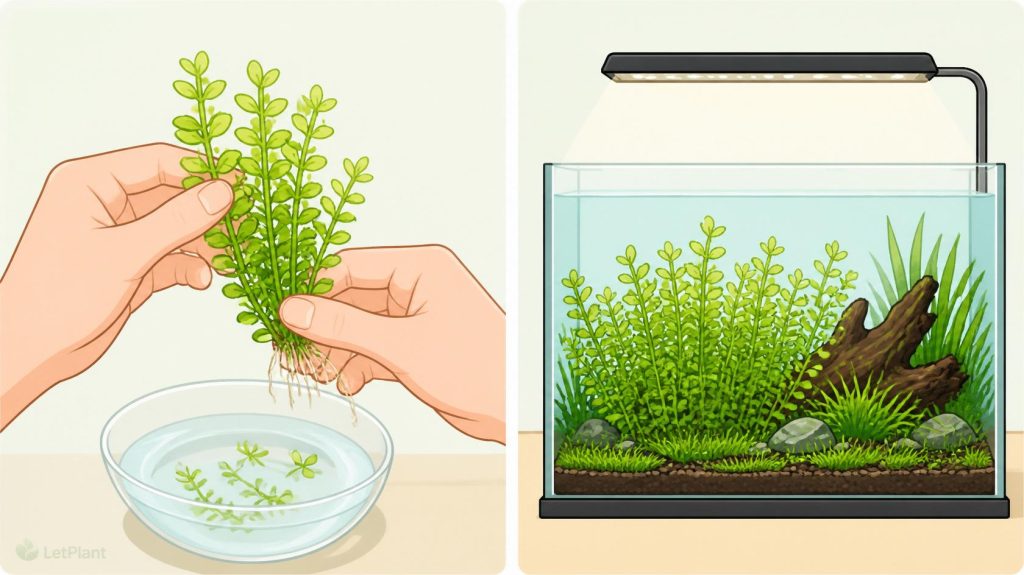
Planting moneywort in your tank is straightforward. Use clean aquarium scissors to trim a healthy stem 4–6 inches long. Remove a few of the lowest leaves so the bare stem can bury easily without trapped air.
Then simply insert the stem tip 1–2 inches deep into the substrate. It helps to plant stems in small clusters (spacing about 1–2 inches apart) so they form a mini-bush as they grow.
Within a week or two, the buried end will send out roots and anchor the stem. As the photo shows, planted moneywort quickly takes root in nutrient substrate.
Propagating moneywort is just as easy. Any trimmed top or snapped stem can be replanted: simply cut off stem sections 3–4 inches long, remove their bottom leaves, and push them into the gravel or soil. Those cuttings will root and grow new vertical shoots.

Even leaving a cut stem floating on the surface can produce new rooted stems hanging down into the water.
This means you can multiply moneywort freely – every healthy stem tip becomes a new plant. In fact, if you trim an inch or two off the top and replant it, the remaining stump in the tank will often sprout side branches and become bushier.
Steps to plant or propagate:

- Trim healthy stems and remove lower leaves.
- Push each stem tip 1–2 inches into substrate (use aquascaping tweezers for precision).
- Space stems evenly for light penetration (group plantings look natural).
- For propagation, take cuttings from trimmed tops and plant them the same way.
- Float excess cuttings if desired – they will still root.
The process is very forgiving: moneywort “propagates through stem cuttings” with almost no trouble. Just give new cuttings some light and a bit of time to root, and soon you’ll see green growth at the cut nodes.
Moneywort Aquarium Plant Care: Growth and Trimming

Moneywort is a vigorous grower. You can expect noticeable new growth within a couple weeks under normal light. Because it grows quickly, regular pruning is key to keep it in check. Plan to trim back the stems about every 2–4 weeks in a planted tank.
When the tops of the stems reach the water’s surface or start to overshadow other plants, cut them down. Use sharp scissors to snip the tips just above a leaf node – this not only controls height but also encourages side branching.
Pinching or cutting the growing tips “encourages side shoots and a bushier form”, so your moneywort bunch will fill out nicely.
After trimming, you can simply replant the cut tops as new plants (see above propagation). The remaining lower stem will often produce new lateral shoots, keeping the bunch full.
Don’t throw away healthy trimmed pieces! By continually replanting tops, you create a thick carpet of moneywort that effectively occupies the midground.
Trimming tips:
- If any lower leaves on a stem turn yellow or transparent, trim them off – they often die back naturally when they get less light.
- To shorten the plant, cut the stems at your desired height (just above a leaf joint).
- Use the trimmed segments as described to propagate more plants.
- Trim more often (1–2 weeks) under very bright conditions or in small tanks, otherwise trim every 2–4 weeks is usually enough.
Keeping up with a simple pruning routine prevents moneywort from shading out neighbors. It will quickly re-grow healthy new shoots, so there’s no harm in cutting frequently.
Common Issues and Maintenance
Overall, moneywort is low-maintenance, but here are a few things to watch in an indoor tank:
- Lower Leaves Dying:

It’s normal for older lower leaves to brown and fall off if they don’t get enough light or nutrients. Ensure light reaches the lower portions of stems, and consider feeding more if lower leaves yellow. - Nutrient Deficiency: If moneywort growth slows or leaves become pale, it may need more fertilizer. Increase liquid fertilization or add root tabs under the plants. Lack of nitrates or iron often shows up as yellowing.
- Algae:

Moneywort actually helps combat algae by consuming excess nutrients. However, if you see green algae growing on the leaves, simply wipe or brush it off during routine maintenance. Good water quality (regular water changes) will keep algae down. - Pests: Moneywort is generally fish- and shrimp-safe. Some herbivorous fish or snails might nibble new growth, but most community fish leave it alone. If snail damage occurs, remove excess snails or replant the damaged shoots.
- Water Quality: Maintain clean water with weekly changes. Moneywort prefers clean water and will grow slower in poor conditions.
By staying on top of basic aquarium care – consistent lighting schedule, periodic water changes, and occasional fertilizing – you’ll keep moneywort healthy. It’s a plant that responds to good conditions by growing fast and vibrant.
Conclusion
Moneywort proves that you don’t need a big budget or extensive know-how to have a lush, living aquarium centerpiece. This Bacopa species is adaptable and beginner-friendly, thriving with minimal equipment.
Give it moderate light, clean water, and a bit of fertilizer, and it will reward you with dense green stems that enrich the aquascape. Trim it back as needed, and it will quickly fill in and provide shelter for fish and shrimp.
In short, moneywort is one of the best all-around stem plants for indoor tanks. Its hardy nature and growth habits make it perfect for apartment hobbyists: with stable water and simple care, you’ll enjoy a fuller, healthier tank, indoors, year-round.