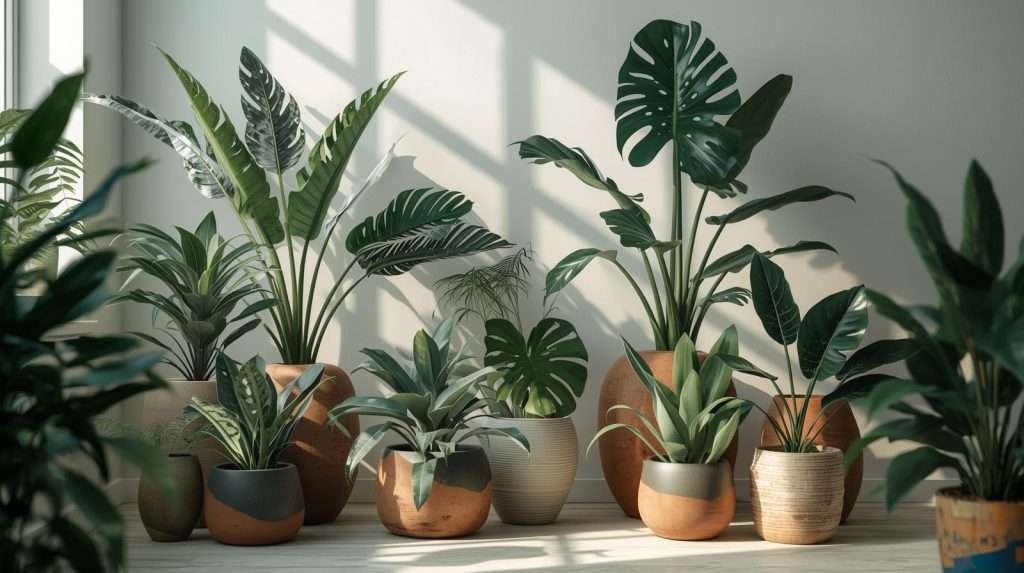
Shingle plants belong to the tropical aroid family (Araceae) and include Rhaphidophora hayi, Rhaphidophora cryptantha and, less commonly, Monstera dubia.
These species grow in lowland rainforests from Southeast Asia and the south Pacific . Their juvenile stems creep along the forest floor until they encounter a tree or rock; then their mature form produces aerial roots that cling tightly to the support.
Leaves lie flush against the surface, overlapping like shingles. In indoor settings, providing a suitable vertical support is essential to mimic this natural habit and encourage the leaves to enlarge and maintain their signature pattern.

Rhaphidophora hayi has solid green leaves, while R. cryptantha has distinctive silver veining. Monstera dubia starts with shingling leaves but later develops large, fenestrated leaves as it matures; it also requires more space.
For urban dwellers seeking a compact climber, R. hayi or R. cryptantha is usually the best choice. Whichever species you select, the cultural requirements—bright indirect light, consistent moisture and humidity, loose soil and vertical support—are similar .
Shingle Plants: Light Requirements


Shingle plants evolved under rainforest canopies where bright sunlight is filtered through tree leaves. Indoors they prefer bright, indirect light, such as near an east‑ or west‑facing window or a north‑facing window without obstructions.
Your houseplant is dying right now — and you have no idea why.
Stop killing your houseplants.
The fix takes 60 seconds.
Snap a photo. LetPlant AI instantly diagnoses what’s wrong, tells you exactly when to water, and alerts you before it’s too late — not after.
FREE Save my houseplants nowNo credit card. No catch. Just healthier houseplants.
Direct afternoon sun can scorch the delicate leaves, causing bleached patches . In a small apartment lacking good natural light, you can position your shingle plant under LED grow lights 12–18 inches (30–45 cm) away; the plant will respond well to artificial light.
Insufficient light leads to smaller leaves and slower growth. If your plant’s new leaves are tiny or absent, gradually move it closer to the light source or increase artificial lighting .

Conversely, if leaves become pale or show brown edges, they may be receiving too much light, hang a sheer curtain to diffuse harsh rays . Adapt the light level gradually to avoid shocking the plant; shingle plants appreciate consistency.
Shingle Plants Temperature and Humidity
These tropical vines thrive in warm, humid conditions reminiscent of their native lowland rainforests.
An indoor temperature range of 55–80 °F (13–27 °C) suits them well . Avoid exposing them to temperatures below 55 °F (13 °C) to prevent cold damage . In hot weather, ensure adequate humidity and hydration to prevent leaf curling .
Shingle plants demand high humidity, around 70 % to support healthy leaf expansion and root attachment. Low humidity causes leaves to curl or stay small . In apartments, replicate rainforest humidity by:
- Using a humidifier:
 A cool‑mist humidifier near your plant boosts ambient moisture; run it for several hours daily.
 - Grouping plants:
 Cluster your shingle plant with other houseplants so their transpiration creates a humid microclimate.
 - Pebble trays:
 Place the pot on a tray filled with pebbles and water, ensuring the pot base sits above the water; evaporation increases humidity.
 - Bathroom or greenhouse cabinet:
 Bathrooms naturally have higher humidity; greenhouse cabinets or terrariums also help maintain moisture .
 - Misting and board soaking:
 Lightly misting the leaves or the moss/wooden board can temporarily increase humidity, but combine it with other methods for a lasting effect .
Monitor humidity with a hygrometer and aim for consistent levels. If leaves develop brown edges or curl, humidity may be too low; adjust by adding more moisture or moving the plant to a more humid location.
Shingle Plants: Soil and Potting Mix

Shingle plants need loose, well‑draining and moisture‑retentive soil. In nature they start as terrestrial plants but quickly climb, so they require an aroid mix that stays airy while holding some moisture.
A good indoor mix includes potting soil combined with coarse perlite or pumice, orchid bark and a small amount of horticultural charcoal or coco coir . This mixture provides drainage and prevents compaction; heavy soil leads to root rot. Aim for a mildly acidic pH around 6.1–6.5.
Select a pot with drainage holes to prevent water from pooling around the roots. Because mounted boards can be top‑heavy, use a pot that is slightly wider and heavier to support the board .
Avoid placing rocks or pot shards in the bottom; they do not improve drainage. For small apartments, consider mounting the board onto a wall or using a vertical planter; this saves floor space and highlights the plant’s shingling habit.
Watering Practices

Shingle plants enjoy consistently moist soil but are prone to root rot if overwatered. Adopt a “soak‑and‑dry” approach: water thoroughly until excess water runs from the drainage holes and then allow the top inch (2–3 cm) of soil to dry before watering again .
You can gauge when to water by lifting the pot, after watering, note how heavy it feels; water again when it becomes noticeably lighter. Alternatively, insert your finger up to your middle knuckle; if the top soil feels dry and lighter in colour, it’s time to water.
Watering frequency varies with season and indoor climate. In summer you may water once or twice a week ; in winter, reduce watering to prevent soggy roots. Always use room‑temperature water and ensure good drainage.
Bottom watering (placing the pot in a tray of water so the soil soaks from below) can also hydrate thoroughly and flush out excess fertilizer.
If you consistently struggle with overwatering, err on the side of slightly underwatering; shingle plants recover better from temporary dryness than from rot .
Providing Support and Mounting

The signature shingling habit depends on vertical support. Without something to climb, shingle plants put out small leaves and may trail or vine like other aroids. A wooden board is the most natural support because aerial roots readily grip its textured surface .
Choose untreated cedar or another rot‑resistant wood; the board should be at least 18 inches (45 cm) tall, or longer if you want a larger plant. As the plant grows, upgrade to a longer board or mount the board on a wall so the plant has room to climb.
Moss poles or coir poles also work, but shingle plants may not cling as easily to them; keep the moss moist to encourage rooting .
To mount your plant, position the board at the back of the pot and secure it firmly in the soil or attach it to a wall. Gently press the vine against the board and use soft string, vinyl plant tape or plant clips to hold each node flush against the surface .
Avoid pulling too tightly, which can damage the stem. As the aerial roots anchor themselves, gradually remove the ties.
For moss boards, mist or soak the moss regularly, daily when humidity is low, to maintain moisture for the aerial roots . Wooden boards require less maintenance but won’t provide additional humidity.
Mounting methods for small spaces include wall‑mounted planks, vertical trellises or open frames. You can also use a narrow board and let the plant wrap around it as it grows . In apartments with limited floor space, mounting the plant high on a wall can double as living art while keeping it away from pets and children .
Fertilization and Feeding

Shingle plants are moderate feeders. During the active growing season (spring through early fall), apply a balanced liquid fertilizer every four weeks.
A formulation with equal parts nitrogen, phosphorus and potassium (10‑10‑10) works well . Dilute the fertilizer to half the recommended strength and apply after watering to avoid root burn . If you grow your plant on a moss board, add the diluted fertilizer to the soaking water .
Do not fertilize during winter or when the plant is not actively growing . Over‑fertilization can cause salt buildup and root damage, leading to yellow leaves or stunted growth.
If you suspect fertilizer burn, flush the soil with plain water and cut back on feeding. Organic houseplant fertilizers are good options for those who prefer gentler, slow‑release nutrients.
Shingle Plants: Repotting and Pruning

Shingle plants appreciate fresh soil and room to grow but dislike overly large pots. Repot every 1–2 years or when roots begin to protrude from drainage holes .
When repotting, choose a pot only one size larger and gently detach the vine from its old support; secure it to the new board with soft ties until it reattaches .
Replace all soil with fresh aroid mix to replenish nutrients and improve drainage . Repotting in spring promotes quick recovery and reduces stress.
Pruning is minimal. Trim off yellowing or damaged leaves to keep the plant attractive and to prevent disease . Avoid removing more than 25 % of the foliage in a single season.
Always use sharp, sterilized scissors and wear gloves; the sap can irritate skin . If your plant outgrows its board, you can encourage it to wrap around the board or extend it with a new plank .
Propagation Techniques

Shingle plants are easy to propagate and propagation offers a sustainable way to expand your collection. The most reliable method is stem cuttings:
- Select a cutting: Choose a section of stem 4–6 inches long with at least one leaf and node . An aerial root on the cutting increases success.
- Prepare the medium: Use sterile potting mix or damp sphagnum moss. For soil, insert the cutting with one node buried and keep the medium moist . For moss, place the cutting on top of damp moss and cover it with a plastic bag to maintain humidity .
- Maintain humidity: Cover the pot with a clear plastic bag or place it in a propagator to create a mini‑greenhouse. High humidity encourages rooting .
- Provide light: Place the cutting in bright, indirect light; avoid direct sun. Mist occasionally to keep the medium moist but not soggy.
- Wait for roots: Roots typically develop within 3–6 weeks . Once established, gradually acclimate the new plant to lower humidity and pot it up in a suitable aroid mix.
You can also root cuttings in water by removing the bottom leaves and submerging the node; transplant to soil once roots are 1–2 inches long .
Another technique is air layering, which involves wrapping a moss‑covered node still attached to the mother plant until it forms roots. Whichever method you choose, maintain warmth and humidity for successful propagation.
Common Problems and Troubleshooting
Even with attentive care, shingle plants occasionally encounter issues. Here are common problems and solutions:
Yellow Leaves

Yellow leaves may indicate overwatering, underwatering, nutrient imbalances or inadequate light. If the soil is consistently wet and leaves yellow , reduce watering and ensure proper drainage.
If the oldest leaves yellow and the soil is dry, increase watering slightly . Pale leaves can also result from too little light; move the plant closer to a bright window .
Curling or Crispy Leaves

Curling leaves often signal low humidity or exposure to cold drafts . Increase humidity, move the plant away from air‑conditioning vents and maintain consistent warmth.
Brown, crispy edges typically result from direct sun or low humidity; provide filtered light and raise moisture levels .
Root Rot
Overwatering and poor drainage suffocate roots and lead to rot. Symptoms include yellowing leaves, soft stems and black, foul‑smelling roots .
To treat, remove the plant from its pot, trim away rotted roots, repot in fresh, well‑draining soil and adjust your watering routine. Let the top layer of soil dry before watering again and ensure the pot has drainage holes.
Pests
Shingle plants can attract mealybugs, scale, aphids and spider mites. Regularly inspect the undersides of leaves and along the board for pests . Treat infestations with insecticidal soap or neem oil , and wipe leaves with a damp cloth to remove pests. Maintaining high humidity and good air circulation can deter spider mites.
If your plant spends summer outside, check for hitchhiking insects before bringing it back indoors.
Small Leaves or Slow Growth
If your plant produces tiny leaves or stalls, it may not have adequate light or humidity. Move it to a brighter spot, provide a taller support and increase humidity . Insufficient support causes the plant to revert to juvenile form, producing smaller leaves.
Toxicity and Safety Precautions
All parts of shingle plants contain calcium oxalate raphides, which cause irritation if ingested. The sap can also irritate skin, so wear gloves when handling or pruning .
Keep plants out of reach of children and pets; ingestion may result in mouth pain, drooling, vomiting or more serious symptoms in pets .
Mounting the plant on a wall or high shelf can prevent accidental contact . If ingestion occurs, rinse the mouth, offer cold milk or yogurt and seek medical or veterinary help if swelling or severe symptoms develop .
Tips for Urban Dwellers
Living in a small apartment doesn’t preclude keeping a shingle plant—these tips help you adapt care to urban conditions:
- Maximize vertical space:
 Mount your plant on a narrow board or wall‑mounted plank so it grows upward, not outward. This creates living artwork without taking up valuable floor space.
 - Supplement low light:
If your apartment lacks bright windows, use LED grow lights placed 12–18 inches (30–45 cm) from the plant to provide adequate light. Set timers to mimic natural daylength (12–14 hours) for consistent growth. - Create microclimates:
 High humidity is challenging in dry apartments. Group plants, use humidifiers or keep your shingle plant in a bathroom or kitchen where humidity is higher . Pebble trays and decorative water features also help.
 - Choose the right pot: Use a pot with a wide base or plant caddy to stabilize the board and prevent tipping . Self‑watering pots can help maintain moisture if you travel frequently.
- Schedule maintenance: Check soil moisture twice a week, mist the board or leaves daily during dry months and clean leaves gently to remove dust. Regular inspection helps catch pests early .
- Design integration:
 Because shingle plants flatten against their support, they can be hung like a picture frame. Consider mounting them above eye level to keep them away from pets and to showcase their unique texture .
Conclusion
Shingle plants bring a touch of rainforest drama into small living spaces. Their flat, overlapping leaves and vertical growth make them perfect for urban dwellers seeking an unusual houseplant.
By providing bright, indirect light, consistent moisture, high humidity and an appropriate climbing support, you can replicate their natural habitat and enjoy watching the leaves enlarge as the vine ascends.
Regular monitoring for pests, mindful watering and occasional feeding will keep your shingle plant healthy. With patience and the right conditions, these living shingles will reward you with lush, emerald foliage and a captivating display.