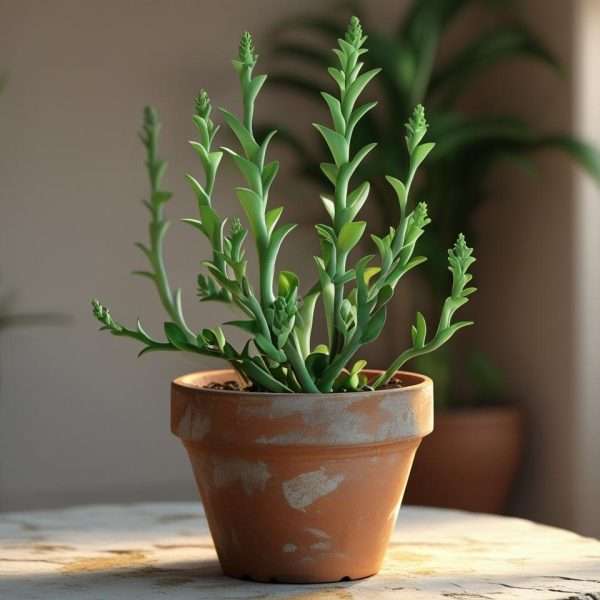
The Hoya carnosa Plant ‘Compacta’ (Hindu rope or rope plant) is a charming, easy-going vine that’s perfect for apartment life. Its twisted, waxy leaves curl into rope-like spirals along trailing stems, giving it a unique, whimsical look.

In spring and summer this quirky plant produces clusters of star-shaped, fragrant flowers (often pink or white with deep red centers). Native to tropical Asia, it’s best suited to warm indoor conditions. Plus, it’s non-toxic (safe for pets) and likes to stay a bit root-bound.
Page Contents

- 1. Quick-Reference Care Summary
- 2. Hoya Carnosa Plant Description and Characteristics
- 3. Hoya Carnosa Plant Light Requirements
- 4. Hoya Carnosa Plant Watering Schedule and Methods
- 5. Temperature and Humidity Needs
- 6. Soil, Potting, and Container Selection
- 7. Fertilizer and Seasonal Feeding
- 8. Hoya Carnosa Plant Pruning, Training, and Trellising
- 9. Common Problems and Solutions
- 10. Safe and Aesthetic Placement Ideas for Small Apartments
- 11. Long-Term Care and Propagation Methods
Quick-Reference Care Summary
- Light
 Bright, indirect light (east/west windows are ideal; avoid harsh midday sun). In low-light apartments, supplement with fluorescent or LED grow lights ~1–2 ft above the plant for ~12–14 hours/day.
 - Water
 Water sparingly. Let the top ~2–3 inches of soil dry out before watering. When you water, soak thoroughly (until water drains out), then empty the saucer. Reduce watering frequency in winter.
 - Temperature
 Keep between ~65–85°F (18–29°C) by day; a bit cooler at night is fine. Avoid prolonged temps below ~60°F.
 - Humidity
 Prefers moderate-high humidity (40–60%). Increase humidity with a pebble tray, grouping plants, or a room humidifier. Bathrooms or kitchens (with light) can provide extra moisture.
 - Soil & Potting
 Use a loose, well-draining mix (orchid bark, coco coir or peat, plus perlite/pumice). A pot with drainage holes is a must.
Hoyas like to be slightly root-bound, so choose a pot only ~1–2 inches larger than the root ball. Hanging baskets are ideal to let vines trail. - Fertilizer
 Light feeder – fertilize monthly in spring/summer with a balanced, water-soluble fertilizer (diluted to ½-strength). Do not fertilize in fall/winter. If brown leaf edges or a white crust appears on soil, cut back on fertilizer.
 - Pruning/Training
 Minimal pruning needed. Remove dead or yellow leaves only. Never cut the short flower spurs (that’s where blooms form). Let the vines trail naturally or gently tie them around a small trellis/support.
 - Common Issues
 Pests like mealybugs, aphids, and spider mites can hide in the leaf curls. Yellow limp leaves often mean overwatering, while crisp shriveled leaves mean underwatering or low humidity. Adjust care at the first sign of trouble.
 - Placement
 Hang the plant or put it on a high shelf to save floor space. Ensure bright light (natural or supplemented) and avoid cold/heat vents. Grouping with other plants helps humidity. In very dark rooms, a dedicated grow light is very helpful.
 - Propagation
 Easy by 3–4″ stem cuttings (with at least one node). Let the cut end dry a bit, then root it in water or moist mix under a clear plastic cover. Roots usually form in a couple of weeks.
Hoya Carnosa Plant Description and Characteristics

Hoya carnosa ‘Compacta’ has beautiful curly, rope-like vines. Its thick, opposite leaves spiral tightly along the stems. Mature vines can trail 1–2 feet long (often longer in warm, bright conditions) and look lush in hanging baskets or when trained on supports.
The foliage is rigid, puckered, and dark green. When happy, the plant blooms in spring/summer with clustered, star-shaped flowers – usually pink or white with deep red centers.
These waxy umbels are fragrant and last for a few weeks at a time. Because of its compact size (about 1–2 feet) and slow growth, the Hindu rope is ideal for apartment container gardens.
Hoya Carnosa Plant Light Requirements

Your houseplant is dying right now — and you have no idea why.
Stop killing your houseplants.
The fix takes 60 seconds.
Snap a photo. LetPlant AI instantly diagnoses what’s wrong, tells you exactly when to water, and alerts you before it’s too late — not after.
FREE Save my houseplants nowNo credit card. No catch. Just healthier houseplants.
Bright, indirect light is key. Place your rope plant near an east- or west-facing window where it receives plenty of gentle sunlight.
If your only window faces south, use a sheer curtain to filter intense midday rays and prevent leaf scorch. Avoid deep shade: too little light will stunt growth and prevent flowering.
In dim apartments, supplement with artificial light. A cool-white or full-spectrum fluorescent/LED lamp about 12–24 inches above the plant can mimic daylight.
Aim for roughly 12–14 hours of light daily to keep the Hoya thriving. Even under grow lights, give it a regular light/dark cycle (about 6–8 hours of darkness overnight).
Hoya Carnosa Plant Watering Schedule and Methods

This rope plant holds water in its thick leaves, so it prefers to dry out between waterings. Water deeply but infrequently: let the top ~2–3 inches of soil dry out before watering.
When you water, do so thoroughly – water until it flows out the drainage holes – then discard any excess in the saucer.
In the growing season (spring/summer) this often means watering roughly every 1–2 weeks, depending on pot size and indoor conditions. In winter, water only about once every 2–3 weeks since growth slows.
Always check soil moisture before watering. For example, stick your finger into the soil up to the second knuckle; if it feels dry at 1–2 inches deep, it’s time to water. Avoid letting the plant sit in water, as that causes root rot.
Yellow, limp leaves usually indicate overwatering, while shriveled or wrinkled leaves signal it’s too dry. Adjust accordingly – it’s safer to underwater than to keep the soil soggy.
Some growers even bottom-water by placing the pot in a tray of water for a few minutes so the plant draws up moisture and then removing it, which encourages deep rooting without waterlogging.
Temperature and Humidity Needs

Tropical native, the rope plant likes normal warm indoor temps. Daytime 65–85°F (18–29°C) is ideal, with nighttime dipping slightly cooler. Avoid long exposure to temps below ~60°F, and keep it away from cold drafts (e.g. near doors) and hot air vents.
Humidity can be a challenge in dry apartments. Aim for moderate to high humidity (40–60%). If indoor air is very dry, the leaves may look dull or shrivel. To boost humidity, place the pot on a tray of pebbles filled with water (keeping the pot above the water line).
Grouping your hoya with other plants also creates a moister microclimate. A bright bathroom or kitchen (with a window) can be ideal, since steam from showers or cooking raises humidity.
You can also mist the leaves occasionally or use a room humidifier. Just mist lightly and let leaves dry (persistent wetness on foliage can cause rot).
In winter, a small humidifier or a temporary humidity tent (clear plastic draped over the plant for short periods) helps prevent dry-season leaf crisping.
Soil, Potting, and Container Selection

Hindus rope is semi-epiphytic, so it needs light, airy soil. Use a chunky mix: orchid bark, coco coir or peat moss, plus perlite or pumice. This ensures excellent drainage and root aeration.
You can buy an orchid or cactus mix, or make your own (a common recipe is 1 part peat/coir + 1 part orchid bark + 1 part perlite). Avoid heavy garden soil or any mix that stays soggy for days.
Always choose a pot with drainage holes. Interestingly, rope plants like to be a bit root-bound: a container only 1–2 inches wider than the current root ball is ideal. This snug fit can encourage blooming.
Hanging baskets are especially well-suited: they allow vines to drape down in air and make the plant a living sculpture. If you use a hanging pot, ensure it’s lined (with moss or a liner) to keep the soil from spilling out.
Plan to repot only occasionally. With slow growth, most rope plants are happy for several years before needing fresh soil. Typically repot every 2–3 years or when roots clearly fill the pot.
Do this in spring: gently lift the plant, shake off old soil, trim any rotten roots, and move it into fresh mix in a pot just one size up.
Always ensure the new pot has drainage, and let the plant recover before heavy watering. Avoid repotting during bloom time, as disturbance can drop buds.
Fertilizer and Seasonal Feeding

Hoya rope plants are light feeders. During the growing season (spring and summer), feed monthly with a balanced, water-soluble fertilizer at half-strength. Stop fertilizing in fall and winter; the plant rests and doesn’t need extra nutrients then.
Over-fertilizing can damage roots and cause salt build-up (signs include brown leaf tips or a white film on the soil), so err on the side of underfeeding.
If you want to encourage more blooms, you can switch to a fertilizer slightly higher in potassium (the middle number) in spring.
This can give a small boost to flower production. However, remember that light and water matter most for flowering. Always water after fertilizing, and every few months flush the soil with plain water to clear any residual salts.
Hoya Carnosa Plant Pruning, Training, and Trellising

Because it grows slowly, pruning is usually minimal. Remove only dead or yellow leaves, and trim back any straggly stems at a leaf node to shape the plant.
The most important rule: never cut off the flower spurs – these short stalks are where clusters form. Once a spur is made, it will bloom each year. If you accidentally prune a spur, that branch will just have to grow a new one to bloom again.
For display, let the vines drape naturally or attach them to a support. You can gently coil stems around a small moss pole, trellis, or wall hook.

The photo above shows a hanging basket display. If you prefer vertical training, twist or tie the vine in place along a support (using soft plant ties to avoid damage).
Always use clean, sterilized scissors/shears when cutting. After pruning, wait a week before any fertilizer to let the plant recover. With minimal pruning and creative training, your rope plant will stay healthy and showcase its signature rope-like foliage.
Common Problems and Solutions
- No Blooms
Often caused by too little light or cutting off flower buds. Ensure bright indirect light and avoid removing the spurs. Also, rope plants can take several years to mature and bloom, so patience is needed. - Shriveled Leaves
 Usually due to underwatering or low humidity. Check soil moisture and mist or raise humidity if the air is very dry.
 - Yellow Leaves
 Soft yellow leaves typically mean overwatering. Let soil dry more between waterings. Yellow spotting or bleached areas can also mean sunburn – move the plant to less intense light if you see this.
 - Leaf Drop
 Hoyas may drop leaves if conditions change abruptly (cold draft, move, or extended neglect). Try to keep environment and watering consistent. New leaves should grow back once conditions stabilize.
 - Pests
 Spider mites, mealybugs, and aphids love hiding in the leaf curls. Inspect the plant regularly. If you find pests or sticky residue, spray the leaves with water and apply neem oil or insecticidal soap every few days until they’re gone.
Quarantine new plants to avoid infestations. - Root Rot
 Caused by keeping soil too wet. Symptoms include wilting even when wet and a foul smell. If suspected, repot immediately in fresh, dry mix and trim away any brown, mushy roots.
Catching issues early and adjusting light, water, or humidity will help your rope plant bounce back quickly. These plants are generally forgiving when their basic needs are met.
Safe and Aesthetic Placement Ideas for Small Apartments
A hanging rope plant brightens a room without taking up floor space. It’s in a suspended pot, allowing the curly vines to cascade down freely. In tiny apartments, using vertical space is the key:
- Hanging Displays
 Use a ceiling hook or wall bracket. Hang your rope plant in a decorative basket or macramé hanger near a window. This keeps surfaces clear and shows off its unique vines.
 - High Shelves & Ledges
 Place the pot on a tall shelf or bookcase. The vines will spill over the edge, adding greenery at eye level. This also moves the plant closer to light.
 - Plant Stands
 A tall stand or corner plant ladder by a sunny window lifts the plant higher and frees floor space. Its foliage can drape down attractively.
 - Under-Lighting
 If natural light is very limited, install a slim LED grow bar or fluorescent grow light a foot or so above the plant. Even a bright desk lamp with a grow bulb can supplement light.
 - Grouping
 Group your Hoya with other plants (like ferns or tropicals) on a bathroom counter or kitchen shelf (with light). They’ll raise humidity for each other and create a lush display.
 - Safety
Keep it away from heating vents or cold drafts. Even though the plant is pet-safe, hanging it high also keeps it out of reach of curious pets or children.
By thinking vertically and creatively, your rope plant can thrive in even the coziest space. Its compact, trailing habit works well in hanging baskets, high cupboards, or as a soft touch atop cabinets – all without cluttering your limited square footage.
Long-Term Care and Propagation Methods
With steady care, a Hindu rope plant can thrive for years. Because it grows slowly and likes being a bit root-bound, you’ll only repot every few years. When you do repot (best in spring), choose a container just one size larger with fresh airy mix, and water lightly afterward.
Propagation: Take a 3–4″ stem cutting in spring or summer. Include at least one leaf node. Let the cut end dry (callous) for a few hours. Then place the cutting in a small pot of moist, chunky mix or in a jar of water.
Cover it loosely with a plastic bag to keep humidity high. Roots should appear in a week or two; you’ll see little root tips or new leaves.
Once roots develop, transplant the cutting into a regular potting mix and care for it as a young rope plant. (Tip: Older vines can also be air-layered against moist soil to create new plants.)
Every few years, you can trim off any old woody stems or spent flower clusters (after blooming) to encourage fresh growth. Just be sure not to cut off the short spur that remains – that’s where the next year’s flowers will form.
Summary Checklist:
- Bright, indirect light (use LED grow lights if needed).
- Water deeply but sparingly; let soil mostly dry between waterings.
- Keep warm (65–85°F) and maintain moderate-high humidity (40–60%).
- Plant in a loose, well-draining mix and use a pot with drainage (hanging baskets ideal).
- Fertilize lightly in spring/summer (monthly, diluted); do not feed in winter.
- Prune only dead foliage; never remove the flower spurs.
- Watch for pests (mealybugs, aphids); treat early with water rinse and neem/soap.
- Use vertical space: hang the plant or set it on high shelves/stands.
- Propagate easily via 3–4″ stem cuttings with a node.
Following these tips will help your Hoya carnosa ‘Compacta’ stay healthy and add lush, rope-like greenery (and even occasional fragrance) to your apartment for years to come. Enjoy watching your rope plant grow and bloom in its new home!