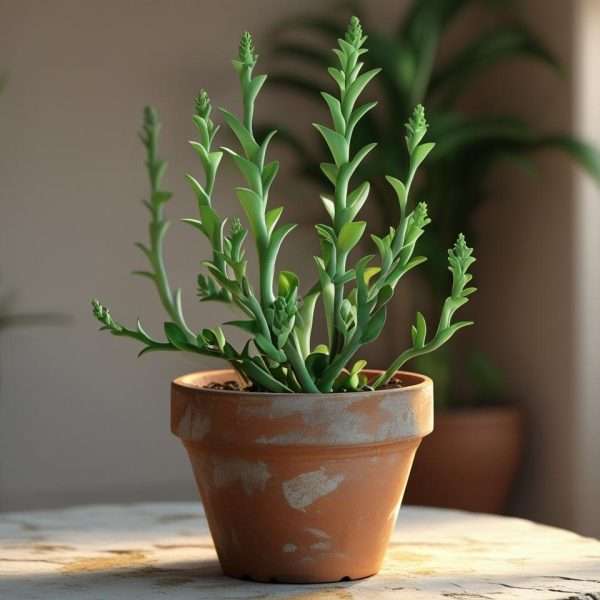
The Creeping Inch Plant (Tradescantia), known for its striking variegated foliage and cascading growth habit, is a favorite among indoor plant lovers for both its beauty and ease of care. With its vibrant purple, green, and silver-striped leaves, it adds a lively splash of color to any indoor space.

Whether trailing from a hanging basket or perched on a windowsill, this resilient tropical plant thrives with just a bit of attention to light, watering, and pruning. This comprehensive care guide covers everything you need to know to keep your Tradescantia healthy, lush, and thriving indoors year-round.
Page Contents

- 1. Quick-Reference Care Summary/Checklist
- 2. Creeping Inch Plant Light Requirements
- 3. Creeping Inch Plant Watering Routine & Soil Drainage
- 4. Creeping Inch Plant Humidity and Temperature Preferences
- 5. Creeping Inch Plant Fertilizing
- 6. Creeping Inch Plant Pruning and Shaping
- 7. Creeping Inch Plant Common Pests and Diseases
- 8. Creeping Inch Plant Propagation Methods
- 9. Troubleshooting Table
- 10. Safety Around Pets and Children
Quick-Reference Care Summary/Checklist
- Light
Bright, indirect light is best (east/west windows). Tolerates moderate light but will become leggy and lose variegation in low light. In dim spaces, use a full-spectrum grow light.

- Water
Keep soil evenly moist but not waterlogged. Water when the top 1–2 inches of soil dry out. Use lukewarm water. Reduce watering in winter when growth slows.

- Soil & Drainage
Use a light, well-draining mix (e.g. equal parts potting soil, peat or coco coir, and perlite/vermiculite). Always plant in a pot with drainage holes to avoid soggy roots.

- Humidity/Temp
Prefers average to high humidity. Typical homes (20–40% RH) are tolerated, but brown leaf tips signal dryness. Use pebble trays or misting to raise humidity. Keep temperatures ~60–75°F (15–24°C); avoid cold drafts or heating vents.

- Fertilizing
Feed with a balanced houseplant fertilizer (e.g. 10‑10‑10) at half strength about once a month during spring and summer. Cut back or stop fertilizing in fall/winter.

- Pruning/Shaping
Pinch back stems regularly to keep the plant bushy. Tradescantia will naturally trail if unchecked, so prune or pinch tips to encourage branching and fit in small spaces. Use cuttings from pruning for propagation.

Your houseplant is dying right now — and you have no idea why.
Stop killing your houseplants.
The fix takes 60 seconds.
Snap a photo. LetPlant AI instantly diagnoses what’s wrong, tells you exactly when to water, and alerts you before it’s too late — not after.
FREE Save my houseplants nowNo credit card. No catch. Just healthier houseplants.
- Pests/Diseases
Watch for spider mites, mealybugs, aphids, scale – these sap-sucking pests can be washed off or treated with neem/insecticidal soap. Prevent root rot by ensuring good drainage and not overwatering.

- Propagation
Extremely easy. Root 3–4″ stem cuttings in water or moist soil, then pot up new plants. You can also divide a crowded pot.

- Troubleshooting
Common problems include leggy, sparse growth or faded leaves (often due to low light), brown leaf tips (low humidity or inconsistent watering), and yellow or dropping leaves (often over/under-watering). See table below for more issues.

- Pet/Child Safety
Tradescantia is often labeled mildly toxic. The ASPCA lists “Inch Plant” as toxic to cats/dogs (causing dermatitis).
In reality, only the sap causes irritation and ingestion usually just mild upset. Still, place it where pets and children can’t nibble (hanging baskets or high shelves are good).


Creeping Inch Plant Light Requirements

Tradescantias thrive on bright, indirect light. An east- or west-facing window is ideal; a southern window is fine if the plant is set back or shaded by a sheer curtain.
Under strong direct sun (especially hot afternoon rays) the leaves of a creeping inch plant can scorch, while under very low light the plant will stretch out, become “leggy,” and lose its variegation. In fact, insufficient light is the most common cause of pale or greened-out leaves.
If natural light is scarce (typical in small apartments or north-facing rooms), supplement with artificial lighting. Full-spectrum grow lights or bright LED bulbs can keep inch plants colorful and compact.
For example, in a dim corner you might use a 2,000–3,000 lux LED lamp for 12–14 hours a day to simulate daylight. Many growers note that north windows or shaded spots require a grow light to avoid a droopy, leggy plant.
| Lighting Level | Example / Placement | Effect on Tradescantia |
| Bright indirect (best) | East/West window, filtered sun | Vivid purple/green variegation and robust growth. Avoid scorching (move plant a few feet back from glass). |
| Moderate indirect (OK) | North window, or shaded room | Growth slows; leaves may grow larger and lose contrast. Plant can survive but often becomes leggy. |
| Low/artificial light (just tolerant) | Far from windows, basic bulbs | Very slow growth; plant will remain small or leggy. Use a full-spectrum grow light if possible. |
Creeping Inch Plant Watering Routine & Soil Drainage
Watering
 Creeping Inch plants like even moisture but hate sitting in water. The most reliable approach is to water thoroughly, then allow the top 1–2 inches of soil to dry out before the next watering.
In practice, this often means watering roughly once a week in bright conditions, but only once every 10–14 days in low light or cooler weather. Always water with lukewarm (room-temperature) water – cold water can shock this tropical plant.
Signs of over/under-watering

Watch the leaves and soil. Overwatering causes yellowing leaves, a mushy stem base or root rot (see Pests/Diseases below). Underwatering shows as drooping, crispy or brown-edged leaves.
If in doubt, feel the pot’s weight: a very light pot usually means it’s time to water. Tip: Place a moisture meter or simply poke a finger into the soil to check for dampness.
Soil & Drainage

Use a light, well-draining potting mix. A common recipe is equal parts peat moss or coco coir, perlite (or coarse sand), and regular potting soil.
This mix holds some moisture yet lets excess drain away. Do not use heavy garden soil or mixes that compact easily. Always plant in a pot with holes: standing water at the bottom will quickly rot the roots.
For container size, tradescantias prefer somewhat snug quarters. Repot only when roots fill the pot (usually every 1–2 years). When repotting, choose a pot only 1–2″ larger than the previous one to prevent excess moisture retention. Fresh soil and a clean pot help prevent diseases.
Creeping Inch Plant Humidity and Temperature Preferences
Tradescantia originates from humid tropical regions, so it prefers higher humidity than many common houseplants. It will survive average home humidity (around 20–40%), but dry air often causes brown, crispy leaf tips. If your indoor air is dry (common in winter with central heating or in air-conditioned summer homes), increase local humidity around the plant. Good methods include:
- Pebble tray
 Set the pot in a tray of water with pebbles so the waterline is below the pot’s base. Evaporation will keep the air around the plant moister.
 - Misting
 Lightly mist the foliage daily (ideally in the morning) to raise surface humidity and reduce spider mite issues.
 - Humidifier
 In very dry rooms, a small humidifier can make a big difference. Aim for at least 40–50% RH if possible.
Temperature: Tradescantias like steady warmth. Keep them in the comfort range of 65–75°F (18–24°C). Avoid exposing the plant to temperatures below ~60°F (15°C); cold drafts or sudden chill will cause leaf drop.
Likewise, keep it away from heating vents or radiators – hot, dry air can scorch leaves. In short, any place you would normally keep your houseplants (a living room or bedroom) is fine, just avoid extremes.
Note: Modern climate control can be tricky. If your home’s heating or AC dries the air too much, monitor leaf edges for browning. Likewise, dry heat can encourage pests (like spider mites), so use humidity tricks to counteract central heating or AC dryness.
Creeping Inch Plant Fertilizing

For lush growth and vibrant color, feed Tradescantia during its growing season (spring through summer). Use a balanced, water-soluble fertilizer (such as 10-10-10 NPK) at half strength to avoid burning the roots.
Typically, fertilize about once a month from spring to early fall. In winter, the plant’s growth slows and it needs little to no fertilizer.
Over-fertilizing can harm tradescantia: signs include brown leaf edges or a white crust on the soil. Under-fertilizing shows up as pale or tiny leaves and sluggish growth. If you see these, adjust accordingly.
Organic options like worm compost tea or a diluted fish emulsion can also work. Always water the plant before applying fertilizer to prevent root burn.
Tip: Liquid houseplant fertilizer or a gentle fish emulsion is often easiest. For example, dilute a 20-20-20 mix to half strength and water in with every 4th or 5th watering during growth months.
Creeping Inch Plant Pruning and Shaping

Tradescantia is a fast grower, and regular pruning keeps it compact and full – key for small spaces. To encourage bushiness, pinch or cut back stems above leaf joints. This forces the plant to branch out.
A good technique is to pinch the growing tip back to the second set of leaves; two new shoots will then develop. Trim off any excessively long or leggy vines to maintain your desired shape.
Many growers let inch plants trail (in hanging baskets or tall containers) for a waterfall effect. If you prefer a “bushier” indoor plant, prune more aggressively.
You can even plant multiple cuttings together in one pot for a full mound of foliage. As you prune, you gain plenty of cuttings – see Propagation below to put those to use.
Compact growth tip: Rotate your plant occasionally so all sides get light, preventing one-sided legginess. Also, avoid neglect: a slightly root-bound plant will often have firmer, more compact growth than one in a huge pot.

Creeping Inch Plant Common Pests and Diseases
Inch plants are generally tough, but indoor conditions can invite a few common problems. Watch for:
- Spider Mites
 Tiny pests that cause fine webbing and stippled (speckled) leaves. They thrive in dry conditions. If you spot webbing or tiny moving dots, raise humidity and spray the plant with a strong stream of water or insecticidal soap.
 - Mealybugs
 Look like small, white cottony masses in leaf joints or on stems. They suck sap and weaken the plant. Remove them by wiping with alcohol (cotton swab dipped in isopropyl alcohol) or treat with neem oil.
 - Aphids
 Green or black insects on new growth, often leaving a sticky honeydew residue. Rinse them off under water or spray with soapy water/neem oil.
 - Scale Insects
 Hard little bumps on stems or leaves. Pick off by hand or scrape gently, then treat with alcohol or neem oil as with mealybugs.
 - Fungus Gnats
 If your soil stays very wet, tiny black flies may appear and larvae can harm roots. Prevent by letting the topsoil dry out and use yellow sticky traps to catch adults.
A barrier of sand or a neem-based drench can also break their life cycle. (See extension guidelines.) - Root Rot
 Caused by persistently soggy soil. Signs are wilting despite watering, black mushy roots, and yellow leaves. The cure is to repot immediately: trim away rotted roots, discard old soil, and plant in fresh mix. Adjust your watering so the soil isn’t waterlogged.
 - Leaf Spot & Powdery Mildew
 Rare indoors if air circulates, but overly humid or stagnant air can cause brown or black spots (leaf spot) or white powdery patches. Improve air flow, avoid getting leaves wet when watering, and remove affected leaves. A mild fungicide can be used if needed.
In general, isolate any infested plant promptly to avoid spreading pests, and treat early. A healthy Tradescantia (with good light, clean leaves, and moderate humidity) resists problems much better.
Creeping Inch Plant Propagation Methods
Growing new plants from cuttings is easy year-round. The best method is stem cuttings:
- Snip Cuttings
 Using clean scissors, cut a healthy stem just below a leaf node (the little bump where leaves attach). Each cutting should have at least 2–3 pairs of leaves and be 3–4 inches long. Remove the bottom leaves so a node will be free of foliage.
 - Rooting in Water
 Place the cut end(s) in a glass of water, ensuring at least one node is submerged. Keep the jar in bright, indirect light and change the water every few days. Roots often appear within 1–2 weeks (you’ll see tiny white roots).
 - Rooting in Soil
 Alternatively, plant the prepared cuttings directly into moist, well-draining soil. Bury a node or two under the surface. Cover the cutting with a plastic bag or dome to maintain humidity until roots develop.
 - Potting Up
 Once roots are a few inches long (if water-rooted) or new growth appears (if soil-rooted), transplant the cuttings into a small pot with potting mix. Space multiple cuttings together for a bushier effect. Water lightly to settle the soil.
Additional methods: Tradescantia will also root if trailing vines touch soil (simple layering). You can pinch or bury a long stem in the pot to form a new rooted plant. For a very full plant, you can also split a large clump at repotting time (division).
Propagation is not just for new plants – it’s a way to rejuvenate a leggy plant by cutting it back and starting new growth from the cuttings. And of course, you’ll have extra free plants to share with friends!
Troubleshooting Table
| Issue/Symptom | Likely Cause | Solution |
| Leggy, sparse growth | Inadequate light (plant stretching towards light) | Move to brighter spot; prune back long stems to encourage bushiness. |
| Faded or green leaves (loss of variegation) | Too little light or nutrient deficiency | Increase light (bright indirect); feed with balanced fertilizer. Cut away any all-green revert stems to keep variegation. |
| Brown/crispy leaf tips | Low humidity, over-fertilizing, or inconsistent watering | Raise humidity (misting, pebble tray), water consistently (don’t let soil go bone dry or stay waterlogged), and reduce fertilizer strength. |
| Yellow or dropping leaves | Overwatering or sudden change (mover/draft) | Check soil moisture (if soggy, reduce watering; if bone dry, water). Ensure good drainage and stable temperature. Remove dead leaves, adjust care. |
| Yellow, soft leaves (root rot) | Persistently waterlogged soil | Repot: remove dead roots, trim mushy parts, use fresh soil. Water sparingly thereafter – let top soil dry between waterings. |
| White patches on leaves | Powdery mildew (high humidity, poor airflow) | Improve air circulation (use a fan, open vents). Remove infected leaves. If needed, apply a mild fungicide labeled for powdery mildew. |
| Sticky residue, insects on plant | Aphids, mealybugs, or scale | Wipe off pests or blast with water. Treat with insecticidal soap or neem oil. Isolate plant. Repeat treatments weekly until cleared. |
Each problem above is common to indoor tradescantias. Careful observation and adjustment will usually set things right.
For example, if your plant is leggy, giving it just a few extra hours of morning light will often make new shoots much fuller. And if you spot pests, act quickly – a little soap spray or alcohol swabbing can eliminate bugs before an infestation spreads.
Safety Around Pets and Children
While not deadly, creeping inch plants can irritate. According to the ASPCA, Tradescantia (listed as “Inch Plant”) is toxic to cats and dogs, causing dermatitis (skin irritation) if touched or mild stomach upset if ingested. In practical terms, it’s a minor toxin: the clear sap can sting sensitive skin or mouths, but it doesn’t cause serious poisoning.
For pet owners: Keep inch plants out of reach. Hanging baskets or placing pots on high shelves prevents curious cats or dogs from munching on leaves. If ingestion or contact does occur, you may see drooling, vomiting, or irritated skin – in which case, consult a vet as a precaution.
For children: The risk is similarly low. Tradescantia may cause minor gastrointestinal upset if large amounts are eaten, and sap can irritate sensitive skin. Teach kids not to put leaves in their mouths and supervise toddlers around plants. It’s always wise to use gloves when handling if you have very sensitive skin.
In summary, enjoy your creeping inch plant for its beauty, but treat it like any non-edible houseplant: admire, water, propagate – but don’t snack on it. Hanging it or keeping it higher up is a simple “paws and fingers off” solution.