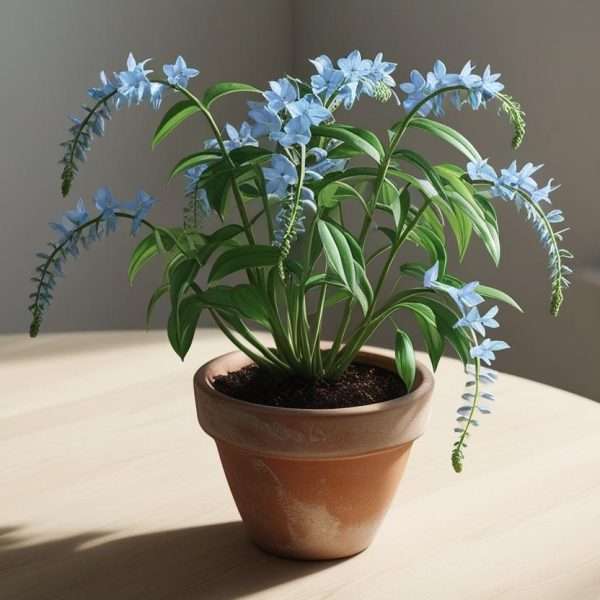
Butterfly pea Plant (Clitoria ternatea) is an exotic tropical vine known for its vivid blue (and sometimes purple or white) pea-shaped flowers. Each blossom lasts a day, but the plant blooms prolifically in warm months, draping windowsills or trellises with color.
The flowers are edible and famous for making bright blue tea and natural dyes (they even turn water blue and change to purple with citrus). In its native Indo‑Asian climate it can grow to 10–15 ft with twining stems, but it’s often kept much smaller in pots.

Because it doesn’t tolerate frost, gardeners in cool zones grow it as an annual or keep it in containers that come indoors before cold weather.

All this makes butterfly pea a rewarding houseplant: it brings tropical flair and unique beauty to your indoor garden, along with the bonus of nitrogen‑fixing leaves that enrich the soil.
Butterfly Pea Plant Lighting

Butterfly pea is a sun‑lover, so give it bright light daily. Place it by a south- or west-facing window for several hours of direct sun each day. In practice, aim for 6–10 hours of strong light; the Spruce notes this as ideal.
If natural sunlight is limited, use full-spectrum grow lights: LEDs or fluorescent tubes about 12–16 inches above the plant. Under artificial lights, run them ~12–16 hours per day to mimic long sunny days.
Your houseplant is dying right now — and you have no idea why.
Stop killing your houseplants.
The fix takes 60 seconds.
Snap a photo. LetPlant AI instantly diagnoses what’s wrong, tells you exactly when to water, and alerts you before it’s too late — not after.
FREE Save my houseplants nowNo credit card. No catch. Just healthier houseplants.
Rotate the pot every week or two so all sides of the vine receive light (this prevents one side from getting leggy while the other stays dark). In short, treat it like a typical sun-loving tropical: bright, sunny days encourage bushy growth and abundant blooms.
Butterfly Pea Plant Temperature and Humidity

Butterfly pea thrives in warm, humid conditions. Keep daytime temperatures around 68–85°F (20–30°C), and avoid letting it drop much below about 60°F (16°C). (Below that it will stall or suffer damage.)
Because it’s tropical, it also prefers high humidity (60–80%). Mist the foliage occasionally, use a pebble tray or humidifier, or group it with other plants to raise moisture around it. Just ensure good air circulation to prevent mold (high humidity plus stagnant air can cause issues).
In winter or with indoor heating on, the air can get dry, so watch for drooping leaves which indicate it wants more humidity.
- Temperature: Maintain a cozy 70–85°F range. Avoid cold drafts or cool windowsills; a consistently warm spot (like near a heated room) is best.
- Humidity: Aim for ~60–80%. Regular misting or a humidifier will make the plant happier than typical dry indoor air.
Butterfly Pea Plant Potting and Support

Butterfly pea needs a roomy, well-draining pot with some support to climb. Choose at least a 12-inch diameter container that’s 6–8 inches deep. This lets roots spread and soil stay moist without drying too fast.
Pots with drainage holes are a must – the plant does not like “wet feet”. (You can use plastic, ceramic or clay; all are fine. Clay pots drain faster, plastic holds moisture longer.) Fill the pot with a loose, airy potting mix (see next section), and ensure any excess water can flow out.
Since butterfly pea is a climbing vine, give it a trellis or stake to grow on. A small bamboo trellis, wire netting or even strings anchored above the pot will help train the vine upward. Indoors, you might tie stems loosely to the support as it grows.
This keeps the plant tidy and lets light reach more leaves. You can also prune the vine to control height and encourage side-branching if needed.
- Support
 Provide a trellis, arbor or stakes for the vine to cling to. Training it up uses space efficiently and shows off the trailing foliage.
 - Drainage
 Always use well-draining potting mix, possibly amended with perlite or sand for extra aeration. Never let water pool in the saucer – dump it out so roots stay healthy.
Soil Composition and pH

Use a well-draining potting mix for butterfly pea. A good recipe is 2 parts quality potting soil + 1 part coarse sand or perlite + 1 part compost. This combination drains quickly yet holds some moisture.
The plant tolerates many soil types but prefers sandy, loamy soil that doesn’t stay soggy. Aim for a slightly acidic to neutral pH: roughly 6.0–7.5 (Epic Gardening suggests 6.6–7.5, and Greg’s guide says 6.0–7.0).
You can mix in 20–25% organic matter (like compost or well-rotted manure) at planting for nutrients. That said, drainage is the most important factor – clay-heavy mixes are best avoided. In short, a loose, friable mix will keep butterfly pea roots happy.
Watering Schedule and Techniques

Water butterfly pea moderately – it likes moist soil but hates sitting in water. A good rule is to water thoroughly, then wait until the top 1–2 inches of soil dry out before watering again.
In summer, this might mean about once a week (roughly an inch of water per week, as The Spruce suggests). In cooler seasons or with low light, water less often (plants grow slower and use less moisture).
Always use room-temperature water and water at the base of the plant. Overhead watering can promote leaf diseases, so it’s better to pour water directly onto the soil.
- Check moisture
 Stick your finger into the soil. When the top inch feels dry, it’s time to water.
 - Water thoroughly
 Water until it drains out the bottom, ensuring all roots get moistened, then empty the saucer.
 - Adjust by season
Increase watering in hot, dry weather; decrease it in cool or dormant periods. - Drainage
 Never let the pot sit in standing water. Good drainage prevents root rot.
Watch the plant’s signals: yellowing leaves or limp stems often mean you’ve kept it too wet, while dry, withered leaves mean it needs more water.
In winter, cut back water (and skip fertilizing) since the vine will grow more slowly. Consistent, balanced moisture is key – a little dryness is safer than soggy soil.
Butterfly Pea Plant Fertilization

Butterfly pea is not a heavy feeder (it can fix its own nitrogen), but some feeding helps flowering. Use a balanced fertilizer (like a 10-10-10 NPK) or a general-purpose organic fertilizer.
Mix a complete fertilizer into the soil at planting time or apply a diluted liquid fertilizer every 4–6 weeks during the active growing season.
After heavy pruning, consider a phosphorus-rich bloom booster to encourage more flowers. Don’t overdo it: too much nitrogen will produce lots of leafy growth but few blooms.
- What to use: A balanced houseplant or bloom formula (NPK near 1-1-1) works fine. Organic options (fish emulsion, compost tea) are also good.
- How often: Feed lightly in spring and summer when the plant is growing strongly. Every 4–6 weeks during this time is typical.
- How to avoid overfeeding: Always dilute liquid fertilizers to half-strength and follow label instructions. Excess fertilizer salts can burn roots or cause leaf tips to brown. If you suspect excess, flush the soil with plain water.
- Dormant periods: Stop fertilizing in fall/winter when growth slows.
Think of feeding as a supplement – compost at planting and occasional gentle fertilizer feeding should keep your butterfly pea happy without the risk of fertilizer burn.
Butterfly Pea Plant Pruning for Shape and Flowers

Regular pruning keeps your butterfly pea tidy and encourages more blooms. Trim back leggy or straggling vines: cutting these stems stimulates side shoots, making the plant bushier. Also, practice deadheading: pinch or snip off spent flowers before pods form.
This forces the plant to make new flowers rather than devoting energy to seeds. If you let pods set, the vine will stop blooming sooner to ripen those seeds.
- Shape: Whenever the vine gets too long or bare in the middle, cut it back. This encourages branching from the cut point.
- After flowering: Once a flowering flush ends (often in late summer), give the plant a harder prune. You can remove a foot or more of growth to “reset” it. It will grow fresh foliage and blooms.
- Maintenance: Remove any yellowing or dead leaves/stems as you see them – this keeps air moving through the plant and reduces disease risk.
In short, pruning makes a healthier, more attractive plant with more blossoms. A neat, pruned butterfly pea is much more likely to flood your space with those beautiful flowers.
Flowering Cycle Indoors

Butterfly pea blooms when it’s warm and getting plenty of light. Outdoors it typically flowers from early summer through fall, and indoors you’ll see a similar schedule if conditions are right. To encourage blooms, give it maximum light and proper nutrition.
A mid-season boost of a bloom-focused fertilizer (higher in phosphorus and potassium) after pruning can help set more flowers. Also, deadheading old flowers (as noted above) will prolong the flowering period.
Since each flower only lasts a day or two, be patient: a healthy butterfly pea will continuously produce new blooms during its flowering season.
If yours isn’t blooming, check the light (not enough sun is a common culprit) and ensure it’s not getting too much nitrogen (excess foliage often means fewer flowers). With the right care, you can enjoy vibrant blue flowers on and off for several months indoors.
Butterfly Pea Plant Pollination Indoors and Managing Seeds

Butterfly pea flowers are perfect (each has male and female parts) and naturally self-pollinating, but they rely on bees to move pollen around. Indoors, without insect visitors, your plant will not set pods on its own. If you want seeds (to save or share), you’ll need to hand-pollinate.
Use a small paintbrush or cotton swab to transfer pollen from flower to flower each morning. Otherwise, simply remove faded flowers/pods to keep the plant focused on new blooms.
- No pods indoors: Potted indoor plants rarely form seeds unless pollinated by hand.
- Hand pollination
 Gently dab a brush inside each bloom to collect pollen, then brush it onto other blooms. Do this during the day when the flower is open.
 - Managing seed production
 If you’re not interested in seeds, pinch off spent flowers as soon as they wilt. This redirects energy into more flowering rather than pea pods.
If you do get pods and want to harvest seeds, wait until pods turn brown and dry, then split them open. Otherwise, pruning off seed pods will actually keep the vine flowering longer.
Repotting: When and How
Repot butterfly pea when it outgrows its container or annually to refresh the soil. A good indicator is roots circling on the surface or the soil drying very quickly.
Spring is the best time. When repotting, move to a pot about 2–3 inches wider than the current one.
Gently loosen the root ball (you may trim circling roots if rootbound) and set the plant at the same soil depth in new mix. Use fresh potting mix as described above. Water well after repotting.
- Size up gradually
 Don’t jump to a huge pot; a moderate increase (2–3″ diameter) is ideal. A very large pot can hold excess water and lead to root rot.
 - Check drainage
 Ensure the new pot still has good holes. If using a more decorative pot, consider lining the bottom with pebbles and using a planter with its own drainage insert.
After repotting, give your butterfly pea a week or two of gentle care (keep it warm and shaded) before resuming full sun or fertilization. Frequent repotting (every 1–2 years) helps keep the plant vigorous.
Butterfly Pea Plant Propagation from Seeds or Cuttings

By seed: Butterfly pea seeds have a hard coat. Soak seeds in water for 12–24 hours before sowing to soften them. Plant seeds about ½–1 inch deep in a moist seed-starting mix. Keep the soil warm (70–75°F) and lightly moist.
Germination typically takes 1–2 weeks. Start them indoors on a sunny windowsill or under a grow light. Once seedlings have a few sets of true leaves, they can be potted up.
By cuttings: Cuttings root faster than seeds for blooms. Take a 6–8 inch stem cutting from a healthy vine (soft to semi-hardwood). Remove all but the top 2–4 leaves.
Dip the cut end in rooting hormone and insert 2–3 inches into a pot filled with moist perlite, sand, or a soilless mix. Keep the cutting warm (around 70°F) and humid (covering with a plastic bag or using a propagation dome helps).
Provide bright light (but not scorching sun) and mist often. Roots should form in 4–6 weeks, after which you can transplant it into regular potting mix. Cuttings can bloom within months, whereas seeds may take a year to flower.
- Seeds: Soak for 24h, then sow in moist mix. Keep warm, germinate in ~1–2 weeks.
- Cuttings: 6–8″ tip cut, hormone-dipped, stuck in moist medium. Keep warm and humid; roots in ~30–45 days.
Either method works well; seeds are easy for filling multiple pots, but cuttings give faster flowers from an established vine.
Common Pests and Diseases

Butterfly pea is generally sturdy, but indoors watch for typical houseplant pests and fungal issues. The most common pests are aphids and spider mites. Aphids are small sap-suckers (often on new growth) and can be wiped off or sprayed with insecticidal soap or neem oil.
Spider mites leave fine webbing and tiny yellow speckles on leaves; treat them by misting leaves regularly, hosing them off, or using an approved miticide. Whiteflies and mealybugs can also occur; these usually require hand removal or soap sprays.
For diseases, powdery mildew (white powder on leaves) can occur if humidity is too high or air flow is poor. Improve ventilation and spray with a suitable fungicide if needed. Root rot is a concern if overwatered: wilted, yellowing vines and mushy roots are signs.
Prevent this by not letting the plant sit in water. If root rot is spotted, repot into fresh mix after trimming away rotten roots.
In short: Keep the plant healthy with proper care (good light, air flow, watering). Check leaves regularly. If pests appear, act quickly with spray or wiping them off. Maintaining balance will keep your butterfly pea thriving indoors.
Seasonal Care (Off-Season Tips)
Since butterfly pea is tropical, it doesn’t truly go dormant indoors, but growth naturally slows in cooler, darker months. In winter or off-season:
- Light: Supplement with grow lights if natural daylight is weak.
- Water: Cut back frequency – only water when the soil is mostly dry. Overwatering in winter can cause root issues.
- No feeding: Stop or greatly reduce fertilizing once you hit fall or winter. The plant won’t use nutrients quickly in low light.
- Temperature: Keep it warm (no lower than mid-60s°F). If your home gets cool at night, avoid placing it near cold windows.
- Maintenance: Gently dust leaves and remove any dead foliage. You may lightly prune in late winter to shape it before spring growth resumes.
By giving it a bit of a “rest” in winter (less water, no food), you’ll set the stage for vigorous new growth and blossoms when spring and long days return. In temperate climates, you’d normally bring it indoors before the first frost and resume regular care in spring.
Indoor Styling and Companion Planting
Butterfly pea’s climbing habit makes it a striking living accent indoors. Here are some styling ideas:
- Treillage and walls
 Train the vine up a small decorative trellis or moss pole in a pot. You can weave it through a hanging macramé trellis or even along a wall-mounted wire grid. Its lush foliage and blue flowers can create a “vertical garden” effect.
 - Hanging baskets
 Let it trail from a hanging pot or shelf. The vines will cascade, and you’ll see blooms spilling down.
 - Pot and décor
 A pot or planter that complements its flowers can enhance the look. For example, a white or blue ceramic pot highlights the intense blue petals. A large ceramic planter gives it an elegant, tropical feel. Group it with other green plants for contrast.
 - Companions
 Choose plants with similar light/humidity needs. We suggests pairing blue butterfly pea with herbs like basil or mint (they all enjoy sun and moist soil).
Other good neighbors might be philodendrons, pothos, or ferns (tropical greenery) and other bloomers like geraniums or petunias in big windows. Companion planting can also help deter pests and fill out an indoor garden. - Themed planting
 Create a mini tropical corner: combine the vine with broad-leaf plants and colorful blooms. Its exotic blue is especially stunning against lush green foliage.
Be creative! A trained butterfly pea vine can become a focal point – think of it as natural ornamentation. Just keep its support structure and pot in mind for aesthetics (for example, a wooden trellis or braided metal support can look stylish with the plant).
Troubleshooting Common Issues
- Leggy vines

This usually means not enough light. The stems will stretch towards the window and have sparse leaves.
Remedy: move the plant to a brighter spot or add a grow light, and prune back the longest vines to encourage branching. - Yellow or dropping leaves
 Often a sign of overwatering or poor drainage. Check the soil moisture and allow it to dry a bit more between waterings.
If leaves are limp and soggy, you may need to repot with fresher, drier mix. (Yellow leaves can also result from cold drafts or nutrient deficiency, so review those factors.) - No flowers
 This is usually due to insufficient light or too much nitrogen fertilizer. Ensure the plant is getting full sun each day.
Switch to a bloom fertilizer higher in phosphorus after pruning to stimulate blossoms. Also make sure the plant is mature enough – seeds can take many months to flower and cuttings a few months. - Brown leaf tips or edges
 Often caused by low humidity or salt buildup. Increase humidity and occasionally flush the soil with water to remove excess fertilizer salts.
 - Powdery mildew or mold
 If you see white powder on leaves, improve air circulation around the plant. Trim out affected areas and consider a fungicidal spray.
 - Root problems
 If roots rot (check by gently unpotting: rotten roots are dark and mushy), repot immediately into fresh soil and reduce watering. If roots are pot-bound (circling tightly), move to a slightly larger pot.
By identifying the symptom (leggy, yellow, brown, no buds, etc.) and referring to the likely cause (low light, watering error, nutrient issue, pest), you can adjust care.
Regular observation is the best prevention – it’s easier to catch a problem early when vines are still young. With attentive care, any issues can be corrected, and your butterfly pea will thrive as a beautiful indoor vine.