Arabian coffee plant care is an engaging and rewarding endeavor for any indoor gardener. These tropical evergreen shrubs (Coffea arabica) bring lush, glossy green foliage and delicate white blossoms into the home, lending a touch of exotic flair.
They are surprisingly adaptable: a well-cared-for coffee plant can thrive in an urban apartment even if space is tight and natural light is moderate. In fact, coffee plants are noted to be relatively easy for beginners, tolerating lower light levels better than many finickier tropicals.

Although they can eventually produce tiny red coffee cherries, most people grow them for the attractive leaves and gentle fragrance of their flowers.

Arabian coffee plant care means mimicking its native highland habitat. Indoors you’ll want bright, filtered light (morning sun is fine, but avoid harsh afternoon rays), consistently warm temperatures (generally 65–75°F or 18–24°C), and high humidity.
Use a rich, slightly acidic potting mix and water regularly so that the soil stays evenly moist (never bone-dry or sitting in water). In dry homes, place the plant on a pebble tray or near a humidifier to prevent leaf edges from browning.

Taken together, these conditions help keep your Arabian coffee plant happy and healthy, yielding a bushy shrub with deep green leaves (and perhaps an occasional blossom).
Quick-Reference Care Checklist
- Light: Bright, indirect light (east- or west-facing window is ideal). Tolerates some gentle morning sun but avoid strong midday rays. In very dim rooms, supplement with an LED grow light (8–12 hours a day) to prevent leggy growth.
- Water: Keep soil evenly moist but not waterlogged. Water thoroughly when the top inch of soil feels dry. Always use a pot with drainage; never let the plant sit in excess water to avoid root rot.
- Soil: Rich, well-draining, slightly acidic potting mix (peat-based or with compost is great). Repot every 2–3 years or when roots fill the pot, using fresh mix to encourage healthy growth.
- Temperature: Warm indoor temperatures (65–75°F). Protect from cold drafts or heat vents – stable warmth keeps leaves from dropping.
- Humidity: High humidity (around 50%+). Use a pebble tray, room humidifier, or group with other plants. Misting helps only briefly; aim for consistently moist air to prevent dry, crispy leaf edges.
- Feeding: Apply a balanced liquid houseplant fertilizer diluted to half-strength every 2–4 weeks during spring and summer. Cut back or pause fertilizing in fall and winter when growth slows.
- Pruning: Prune or pinch back growth in spring to maintain size and shape. This encourages a bushier, multi-branched plant. Remove any dead or yellow leaves promptly.
- Common Problems: Yellow leaves often mean watering issues (over- or under-watering). Brown, crispy edges usually signal dry air or too much direct sun. If the plant looks leggy, it likely needs more light. Check regularly for pests like mealybugs, scale, or spider mites, and treat infestations early.
- Propagation: Best done by stem cuttings (not seeds) for beginners. Take ~6-inch cuttings with a few leaves, use rooting hormone, plant in moist mix under plastic to keep humidity high, and wait for roots (new leaves appear in ~2–3 months).
Arabian Coffee Plant Care: Light

Your houseplant is dying right now — and you have no idea why.
Stop killing your houseplants.
The fix takes 60 seconds.
Snap a photo. LetPlant AI instantly diagnoses what’s wrong, tells you exactly when to water, and alerts you before it’s too late — not after.
FREE Save my houseplants nowNo credit card. No catch. Just healthier houseplants.
Coffee plants thrive with bright, filtered light. Place your Arabica near a sunny window but shield it from direct hot sun, which can scorch its leaves. An east-facing window (morning sun) or a western window (afternoon light) works well.
A south window can be used if you diffuse the harsh rays with a curtain. Avoid north-facing spots with only weak light – coffee plants in too-dim a space will grow spindly and may drop leaves.
If natural light is limited (common in apartments), consider using a grow light 8–12 hours daily. Good light prevents lanky stems and helps new leaves develop their glossy color.

Arabian Coffee Plant Care: Watering

Coffee plants like consistently even moisture. Water thoroughly whenever the top inch of soil starts to dry. After watering, allow excess to drain fully; never leave the pot sitting in a saucer of water.
Overwatering can quickly lead to root rot, so always check that the drainage hole is clear. On the other hand, don’t let the soil dry out completely – coffee plants do not tolerate bone-dry conditions.
A good routine is to water once or twice a week (adjust as needed), keeping the soil damp but not soggy. If you see wilting or dull, drooping leaves, check the soil moisture – the plant might need a good drink.
Use room-temperature water to avoid shocking the roots. In winter, slow the watering slightly since the plant’s growth has slowed.

Wiping or gently rinsing the leaves with water occasionally also removes dust and pests and gives a tiny humidity boost (just don’t leave water sitting on the leaves overnight to avoid spotting).
Arabian Coffee Plant Care: Soil and Potting

Choose a rich, well-draining potting mix. A peat-based or coir mix amended with perlite or coarse sand works great to keep the soil loose and slightly acidic.
Coffee plants naturally grow in fertile forest soils, so adding some compost or worm castings can help mimic those conditions. Check that your pot has plenty of drainage holes.
Repot your coffee plant every 2–3 years or when you see roots circling the pot’s bottom. Moving to a slightly larger pot refreshes nutrients and gives the roots more room.
When repotting, trim any circling or damaged roots. The Spruce also notes that coffee likes a pot one size bigger each time. After repotting, water thoroughly and keep the plant in bright light to recover.
Arabian Coffee Plant Care: Humidity and Temperature
Coffee plants are tropical understorey plants and love warm, humid air. Keep indoor temperatures in the comfortable range (around 65–75°F / 18–24°C).
They can tolerate slightly cooler nights (down to about 60°F) but avoid letting the plant drop much below that. Never place the pot near cold drafts (like poorly sealed windows) or hot vents/heaters, which can cause leaves to yellow and drop.
Maintain high humidity (ideally 50% or more). In most homes (often 30–40% humidity), you’ll need to boost the moisture. A simple pebble tray—setting the pot on pebbles above water—lets evaporating water moisten the air around the plant.

Grouping plants together also creates a mini humidity chamber. If possible, run a room humidifier nearby or place the coffee plant in a steamy bathroom (as long as it still gets light).
Ferns and calatheas make good humidity companions. With higher humidity, your coffee plant will have greener, fuller leaves and fewer brown crispy edges.
Arabian Coffee Plant Care: Feeding and Fertilizing

During active growth (spring and summer), feed monthly or bi-monthly with a balanced houseplant fertilizer (like 10-10-10), at about half the recommended strength.
Coffee plants are not heavy feeders, so err on the lighter side: too much fertilizer can burn the roots. A diluted liquid fertilizer works well; apply it when you water, or mix into your watering can.
You can also use organic boosts: a slow-release pellet fertilizer in spring, or a bit of compost mixed on top of the soil. Reduce feeding in autumn and skip it in winter when the plant’s growth naturally slows.

Well-fed plants will produce shiny new leaves more reliably, but don’t overdo it – if you notice fertilizer burn (brown spots on leaves), flush the soil with water to remove excess.
Arabian Coffee Plant Care: Pruning and Maintenance

To keep an indoor coffee plant a manageable size, prune it occasionally. The best time is in spring, when growth picks up. You can pinch or cut the tips of stems to encourage branching and a bushier shape.
For example, cut back a leggy stem just above a leaf node (about ¼ inch above where the leaf meets the stem). This forces two new branches to grow there. Regular pruning (or topping the plant at 1–2 feet tall) keeps it from getting too leggy for apartment life.
Always use clean, sharp scissors or pruners. Remove any dead, yellowing, or weak leaves and stems as you spot them. This not only improves appearance but also prevents rot or pest issues.
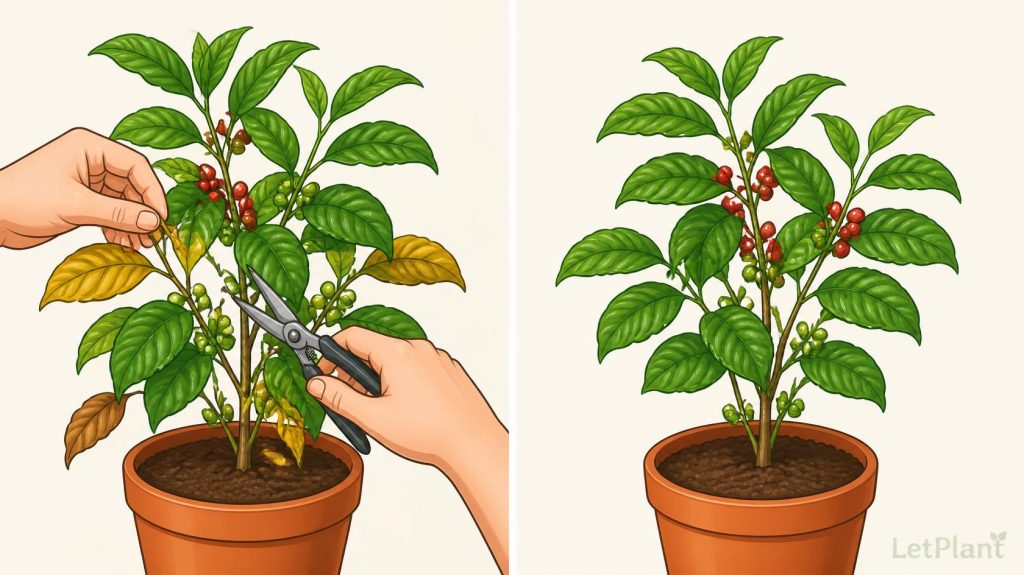
Some growers also trim a bit of the root when repotting to restrain size. With each spring pruning, your coffee plant will develop a fuller, denser habit that fills space nicely without outgrowing it.
Regular upkeep also includes wiping leaves: dusty foliage can’t photosynthesize efficiently. Simply run a damp cloth over the big leaves every few weeks or give the plant a gentle shower (supporting the pot so it drains) to keep it clean.
Common Problems and Pests
Coffee plants are generally sturdy, but watch for a few issues:
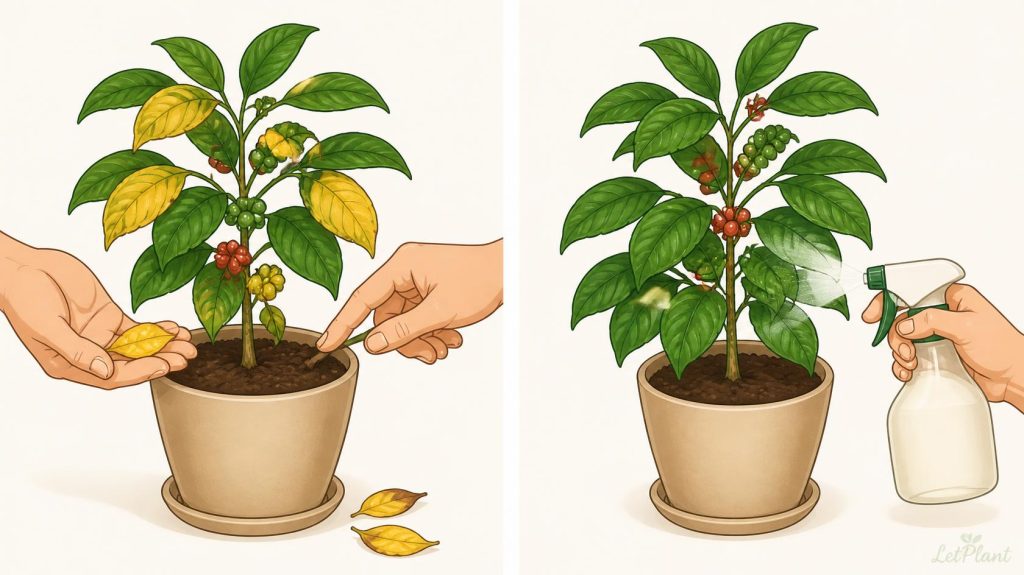
- Leaf Drop or Yellowing: If leaves turn yellow and fall, first check light and water. Overwatering is a common culprit. Ensure your plant isn’t sitting in water, and let the topsoil dry slightly between waterings.
Underwatering can also cause droop, so feel the soil before deciding. If yellowing occurs after a slow response to watering adjustments, it could be a nutrient deficiency or the plant’s way of shedding old leaves. - Brown Leaf Edges: Crispy brown tips usually mean the air is too dry or the plant got some harsh light or fertilizer burn.
Increase humidity (as above) and avoid sudden bright light exposure. Brown leaf margins can sometimes indicate overfertilizing, so flush the soil with clean water to leach salts. - Leggy Growth: If the plant grows long bare stems with few leaves, it needs more light. Move it closer to the window or add a lamp, and pinch back the long tips to encourage new side shoots.
- Pests: Keep an eye on common houseplant pests. Spider mites (tiny specks or webbing on underside of leaves) often appear in dry conditions. Wipe leaves with a damp cloth or apply insecticidal soap/neem oil to knock them back.
Mealybugs (white cottony blobs on stems or leaf joints) and scale insects (small brown bumps) can also infest coffee plants. These can be removed by dabbing with alcohol on a cotton swab or spraying neem oil.
Catching infestations early is key – inspect new plants before they join your collection and isolate any sick ones until clean. Overall, healthy coffee plants are pretty pest-resistant if their care needs are met.
With attentive care (matching the Quick-Reference checklist), most problems are preventable or quickly fixable. Maintaining stable conditions is the best defense: avoid sudden changes in light, temperature, or watering, and your coffee plant should stay glossy and vigorous.
Arabian Coffee Plant Care: Propagation
If you want more coffee plants (or to replace an aging one), stem cuttings are the easiest method for beginners. Here’s a simple approach:
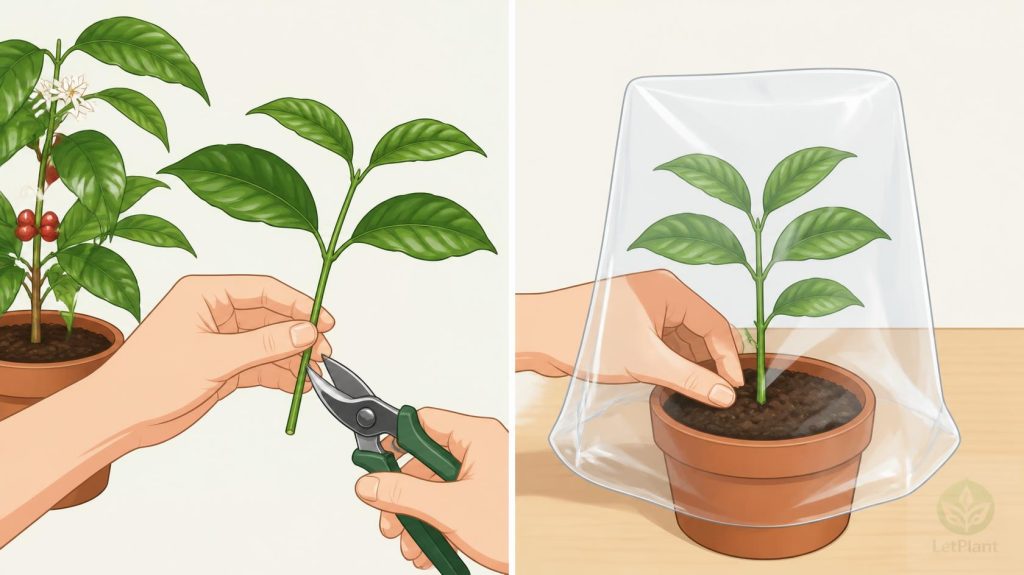
- Take a cutting: Use clean shears to cut a 6–8 inch stem from a healthy plant, just below a leaf node. Choose a semi-hardwood stem with at least 2–3 pairs of leaves. Remove the lowest leaves so a few inches of bare stem remain.
- Use rooting hormone: (Optional) Dip the cut end in rooting powder to encourage faster root development.
- Plant it: Fill a small pot with moist potting mix (the same rich, well-draining mix used for mature plants). Make a hole and insert the cutting about halfway deep. Firm the soil around it.
- Create humidity: Cover the cutting with a clear plastic bag or place it in a mini-greenhouse to keep humidity high. Support the bag so it doesn’t touch the leaves. Place the pot in warm, bright (but indirect) light.
- Wait and water: Keep the soil evenly moist (not soggy). After a few weeks to months, you should see new leaves emerging – a sign that roots have formed.
At that point, gradually acclimate the new plant to drier air and normal care, then pot it on as a young coffee plant.
Coffee can also be grown from seed, but it’s more challenging: seeds must be very fresh (directly from ripe cherries) and kept moist until they sprout. For most hobbyists, cuttings are quicker and more reliable.
Enjoy watching your new coffee plant grow – after 3–5 years it may even bloom indoors, showing fragrant white star-shaped flowers. If you’re lucky (and patient), hand-pollination can set a few red cherries. But even without fruit, these plants are rewarding long-term houseplants.
In conclusion, the keys to successful Arabian coffee plant care are consistent moisture, warm humid air, and bright filtered light. By following the checklist above – watering when the topsoil begins to dry, providing a rich soil, and ensuring good humidity and drainage – even a beginning plant parent can keep this tropical shrub happy.
With time and proper care, your indoor coffee plant will reward you with lush foliage (and perhaps an occasional blossom), adding a lovely tropical accent to your urban home.
Enjoy the process of caring for this exotic houseplant, and you’ll have a vibrant, full-grown coffee plant to admire for years to come.
Happy planting!